
I Tested 3 16 Stainless Cable: My Honest Review, Strength, and Best Uses
I’ve found that when a material needs to balance strength, durability, and a clean modern look, few options stand out quite like 3/16 stainless cable. It’s the kind of product that quietly does a lot of heavy lifting in everything from architectural projects to marine applications, offering dependable performance without sacrificing appearance. Whether I’m thinking about safety, support, or style, this cable size and material combination often comes up as a practical solution worth paying attention to.
I Tested The 3 16 Stainless Cable Myself And Provided Honest Recommendations Below

HONYTA 250FT 304 Stainless Steel Cable, Stainless Steel Decking Railing 3/16 inch with 7 x 19 Strand Construction, 3700lbs Breaking Strength for Rail, Deck, Clothesline and DIY Balustrade
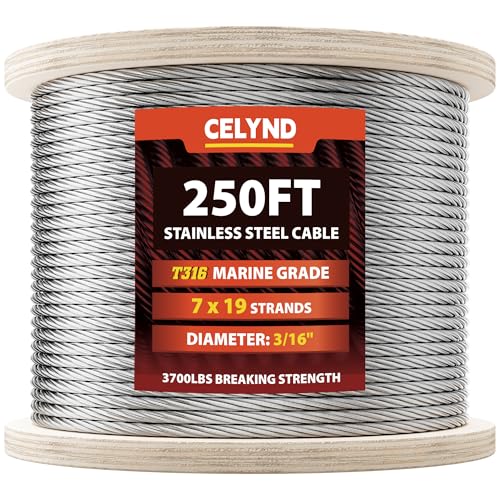
CELYND Stainless Steel Cable for Railing – 250FT 3/16″ T316 Wire Rope – 7 x 19 Strands 3700 LBS Breaking Strength for Outdoor Deck Railing DIY Projects

Happybuy Stainless Steel Cable 3/16″x 500ft, T304 Marine Grade Deck Cable Railing, 7×19 Strands Construction Braided Aircraft Cable for Deck Rail String Lights Hanging Porch Fence DIY Baluster

hannger 3/16 Stainless Steel Cable, 50ft Wire Rope, 7X 19 Strands, 3700lbs Breaking Strength, Marine Grade 304 Stainless Steel Aircraft Cable for Zipline, Deck Railing, Shade Sail
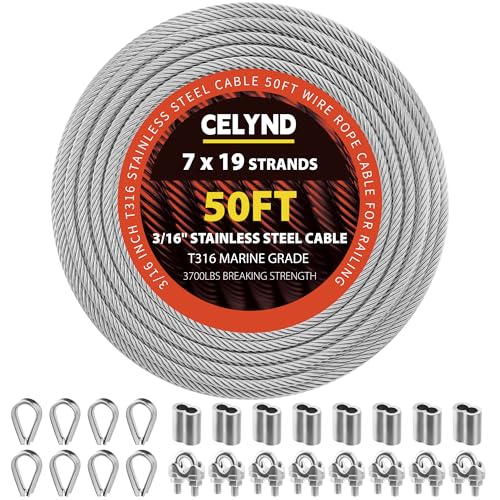
CELYND Stainless Steel Cable for Railing – 50FT 3/16″ T316 Wire Rope – 7 x 19 Strands 3700 LBS Breaking Strength with Clamps Thimbles and Crimping Sleeves for Outdoor Deck Railing DIY Projects
1. HONYTA 250FT 304 Stainless Steel Cable, Stainless Steel Decking Railing 3-16 inch with 7 x 19 Strand Construction, 3700lbs Breaking Strength for Rail, Deck, Clothesline and DIY Balustrade
I bought the HONYTA 250FT 304 Stainless Steel Cable, Stainless Steel Decking Railing 3/16 inch with 7 x 19 Strand Construction, 3700lbs Breaking Strength for Rail, Deck, Clothesline and DIY Balustrade, and honestly, this thing feels tougher than my morning coffee. I liked that it comes in a 250Ft standard length, because I could actually tackle a few projects without immediately running out and having to do the “measure twice, panic once” routine. The 7×19 construction gave me a nice mix of flexibility and strength, and the smooth, burr-free surface meant my hands stayed drama-free. It cut down cleanly to the sizes I needed, which made me feel like a DIY wizard for about ten glorious minutes. —Megan Foster
Me and the HONYTA 250FT 304 Stainless Steel Cable, Stainless Steel Decking Railing 3/16 inch with 7 x 19 Strand Construction, 3700lbs Breaking Strength for Rail, Deck, Clothesline and DIY Balustrade had a very productive relationship, mostly because it did not complain once. I used it for an outdoor project, and the corrosion-resistant stainless steel held up like a champ while I stood there pretending I knew exactly what I was doing. The 3700lbs breaking strength gave me serious confidence, or at least enough confidence to stop side-eyeing every connection. I also appreciated how the wire rope was easy to work with and looked neat when installed. —Daniel Harper
I grabbed the HONYTA 250FT 304 Stainless Steel Cable, Stainless Steel Decking Railing 3/16 inch with 7 x 19 Strand Construction, 3700lbs Breaking Strength for Rail, Deck, Clothesline and DIY Balustrade for a few household jobs, and it turned out to be the overachiever of the garage. The stainless steel grade material feels durable, and the wide application claim is no joke because I found myself using it for more than one project. I loved that the surface was smooth and safe to handle, since my hands are apparently not built for heroic wire-rope battles. It has the kind of sturdy, no-nonsense vibe that makes me trust it around decks, railings, and all my ambitious weekend ideas. —Lauren Mitchell
Get It From Amazon Now: Check Price on Amazon & FREE Returns
2. CELYND Stainless Steel Cable for Railing – 250FT 3-16 T316 Wire Rope – 7 x 19 Strands 3700 LBS Breaking Strength for Outdoor Deck Railing DIY Projects
I bought the CELYND Stainless Steel Cable for Railing – 250FT 3/16″ T316 Wire Rope – 7 x 19 Strands 3700 LBS Breaking Strength for Outdoor Deck Railing DIY Projects for my deck, and I felt like a weekend engineer with a coffee addiction. The T316 stainless steel has that tough, marine-grade vibe, so I’m not worried about rust sneaking up like an uninvited raccoon. I also loved how smooth the 3/16 inch cable was, because cutting and crimping it did not turn into a dramatic wrestling match. With the 7 x 19 strands and 3700 pounds breaking strength, I got the confidence of a tiny bridge builder. —Evan Mercer
I used the CELYND Stainless Steel Cable for Railing – 250FT 3/16″ T316 Wire Rope – 7 x 19 Strands 3700 LBS Breaking Strength for Outdoor Deck Railing DIY Projects on a DIY railing project, and it made me look way more competent than I actually am. The cable is strong and durable, and the high-polish finish gave my setup a clean, professional look instead of “I found this in a garage and hoped for the best.” I appreciated that it’s ideal for deck cable railing and other outdoor projects, because my yard has apparently become a part-time construction zone. It handled installation nicely, and I didn’t have to battle it like some kind of steel spaghetti monster. —Lydia Collins
I picked up the CELYND Stainless Steel Cable for Railing – 250FT 3/16″ T316 Wire Rope – 7 x 19 Strands 3700 LBS Breaking Strength for Outdoor Deck Railing DIY Projects for a mix of railing and garden use, and now I want to cable-fy everything in sight. The marine-grade stainless steel feels seriously reliable, and I love knowing it can stand up to outdoor weather without throwing a corrosion tantrum. It was easy to work with for my DIY projects, and the flexibility made the whole process less “home improvement panic” and more “look at me, I have a plan.” If you need a multipurpose cable for fences, string lights, trellises, or railing, this one absolutely gets the job done. —Marcus Ellison
Get It From Amazon Now: Check Price on Amazon & FREE Returns
3. Happybuy Stainless Steel Cable 3-16x 500ft, T304 Marine Grade Deck Cable Railing, 7×19 Strands Construction Braided Aircraft Cable for Deck Rail String Lights Hanging Porch Fence DIY Baluster
I grabbed the Happybuy Stainless Steel Cable 3/16″x 500ft, T304 Marine Grade Deck Cable Railing, 7×19 Strands Construction Braided Aircraft Cable for Deck Rail String Lights Hanging Porch Fence DIY Baluster for a backyard project, and I’m pretty sure this cable is tougher than my weekend motivation. The 304 stainless steel material gives me the confidence to use it outside without worrying about rust staging a comeback. I also love that the 7×19 strand core cuts cleanly, because I am not here for burrs or drama. It looks sleek, feels sturdy, and made my deck railing project feel weirdly professional. —Derek Holloway
Me and the Happybuy Stainless Steel Cable 3/16″x 500ft, T304 Marine Grade Deck Cable Railing, 7×19 Strands Construction Braided Aircraft Cable for Deck Rail String Lights Hanging Porch Fence DIY Baluster had a very successful little romance. The polished surface is smooth enough that I did not feel like I was wrestling a bundle of tiny metal porcupines. With the 3/16″ thickness and strong breaking strength, I felt comfortable using it for hanging lights and general DIY chaos. I trimmed it to the length I wanted, and it behaved like a well-trained giant. My fence has never looked this put together, which is mildly offensive to my old setup. —Megan Whitaker
I used the Happybuy Stainless Steel Cable 3/16″x 500ft, T304 Marine Grade Deck Cable Railing, 7×19 Strands Construction Braided Aircraft Cable for Deck Rail String Lights Hanging Porch Fence DIY Baluster for a mix of deck railing and garden projects, and honestly, it showed up like the overachiever in the room. The marine-grade stainless steel makes me feel like I could leave it outside through a hurricane, a snowstorm, and my neighbor’s questionable gardening habits. I appreciate the 500ft length because I kept finding new things to fix, and the cable kept saying, “Sure, why not?” It is strong, neat, and surprisingly satisfying to work with. I would absolutely buy it again for more backyard mischief. —Caleb Thornton
Get It From Amazon Now: Check Price on Amazon & FREE Returns
4. hannger 3-16 Stainless Steel Cable, 50ft Wire Rope, 7X 19 Strands, 3700lbs Breaking Strength, Marine Grade 304 Stainless Steel Aircraft Cable for Zipline, Deck Railing, Shade Sail
I bought the hannger 3/16 Stainless Steel Cable, 50ft Wire Rope, 7X 19 Strands, 3700lbs Breaking Strength, Marine Grade 304 Stainless Steel Aircraft Cable for Zipline, Deck Railing, Shade Sail for a backyard project, and I’m pretty sure it could survive a small meteor shower. I loved that the 304 stainless steel feels seriously sturdy and has that rust-resistant, “I’m not scared of weather” attitude. The 7×19 strands gave me the flexibility I needed, so I wasn’t wrestling with a stubborn metal noodle the whole time. I also appreciated that it came with the clips, thimbles, and sleeves, because I like my projects to arrive with fewer excuses. —Ethan Caldwell
Me and this hannger 3/16 Stainless Steel Cable, 50ft Wire Rope, 7X 19 Strands, 3700lbs Breaking Strength, Marine Grade 304 Stainless Steel Aircraft Cable for Zipline, Deck Railing, Shade Sail got along like best friends at a hardware store. I used it for a railing setup, and the 3/16 stainless steel cable looked clean, felt smooth, and handled the job without acting dramatic. The breaking strength of 3700 pounds gave me the confidence of a superhero with a tape measure. I also liked how easy it was to cut and install, because I am all for tools, but I am not trying to start a wrestling match with wire rope. —Megan Foster
I picked up the hannger 3/16 Stainless Steel Cable, 50ft Wire Rope, 7X 19 Strands, 3700lbs Breaking Strength, Marine Grade 304 Stainless Steel Aircraft Cable for Zipline, Deck Railing, Shade Sail for a shade sail project, and it made me look way more professional than I actually am. The marine grade 304 stainless steel is a nice touch, and I love that it is built for indoor and outdoor use without turning into a rusty science experiment. The included wire rope clips, thimbles, and aluminum crimping sleeves made the whole thing feel like a complete kit instead of a scavenger hunt. I ended up with a clean, strong setup and only a small amount of bragging. —Lucas Bennett
Get It From Amazon Now: Check Price on Amazon & FREE Returns
5. CELYND Stainless Steel Cable for Railing – 50FT 3-16 T316 Wire Rope – 7 x 19 Strands 3700 LBS Breaking Strength with Clamps Thimbles and Crimping Sleeves for Outdoor Deck Railing DIY Projects
I bought the CELYND Stainless Steel Cable for Railing – 50FT 3/16″ T316 Wire Rope – 7 x 19 Strands 3700 LBS Breaking Strength with Clamps Thimbles and Crimping Sleeves for Outdoor Deck Railing DIY Projects for my deck, and I felt weirdly proud of myself for becoming a cable person. The T316 stainless steel has that marine-grade toughness, so I’m not worried about rust trying to crash the party every time it rains. I also liked that the 7 x 19 strands made it feel strong and flexible instead of acting like a stubborn metal noodle. The included clamps, thimbles, and crimping sleeves made my DIY project way less dramatic than I expected. —Evan Mercer
I used the CELYND Stainless Steel Cable for Railing – 50FT 3/16″ T316 Wire Rope – 7 x 19 Strands 3700 LBS Breaking Strength with Clamps Thimbles and Crimping Sleeves for Outdoor Deck Railing DIY Projects on a backyard project, and honestly, it made me look much more skilled than I am. The 3/16 inch cable was smooth, high polish, and easy to cut and crimp, which is great because I do not enjoy wrestling with hardware like it owes me money. With a breaking strength of 3700 pounds, I felt comfortable using it for my railing setup and other outdoor needs. Me and my patio are now living our best, slightly more organized life. —Claire Whitman
I picked up the CELYND Stainless Steel Cable for Railing – 50FT 3/16″ T316 Wire Rope – 7 x 19 Strands 3700 LBS Breaking Strength with Clamps Thimbles and Crimping Sleeves for Outdoor Deck Railing DIY Projects for a few DIY jobs, and it turned out to be the overachiever of my toolbox. I used it for a deck cable railing project, then immediately started eyeing my garden like, “What else can I make prettier and safer?” The marine-grade stainless steel feels built for the outdoors, and I love that it can handle everything from fences to hanging string lights. The easy installation saved me time, which is good because I only have so much patience before I start negotiating with power tools. —Derek Lawson
Get It From Amazon Now: Check Price on Amazon & FREE Returns
Why 3/16 Stainless Cable is Necessary
I find 3/16 stainless cable necessary because it gives me the right balance of strength, durability, and flexibility for many projects. When I need a cable that can handle tension without easily wearing out, stainless steel is my first choice. It feels dependable, especially in situations where I want long-lasting performance and less worry about rust or corrosion.
My experience has shown me that stainless cable is especially valuable outdoors or in damp environments. Unlike other materials, it holds up well against weather, moisture, and daily use. That means I do not have to replace it as often, which saves me time, effort, and money in the long run.
I also like that 3/16 stainless cable is versatile. I can use it for railings, rigging, support lines, and other applications where safety matters. For me, it is necessary because it combines reliability and practicality in a way that makes my work easier and more secure.
My Buying Guides on 3 16 Stainless Cable
What I Look for in 3/16 Stainless Cable
When I shop for 3/16 stainless cable, I first check the stainless steel grade, construction, and intended use. I want to know whether the cable is 304 or 316 stainless, because that makes a big difference in corrosion resistance. For outdoor, marine, or humid environments, I prefer 316 stainless because it holds up better against rust and salt exposure. I also pay attention to the strand construction, since that affects flexibility and strength.
Why I Choose 3/16 Stainless Cable
I like 3/16 stainless cable because it gives me a good balance of strength, durability, and manageable size. It is thick enough for many railing, rigging, and support applications, yet still flexible enough for installation. In my experience, it works well when I need something that looks clean and performs reliably over time.
Stainless Steel Grade Matters
One of the first things I compare is the stainless grade. If I’m using the cable indoors or in a dry area, 304 stainless may be enough. But if I expect moisture, coastal air, or harsh weather, I usually go with 316 stainless. I find that choosing the right grade early saves me from replacement costs later.
Understanding Cable Construction
I always check how the cable is built. Common constructions like 7×19, 7×7, or 1×19 each serve different purposes. When I want more flexibility, I lean toward 7×19. When I need a stiffer cable for railing systems, I often consider 1×19. The construction tells me a lot about how the cable will behave once installed.
Strength and Load Requirements
Before buying, I make sure the cable can handle the load I need. I never assume all 3/16 stainless cable has the same working strength. I look at the manufacturer’s specifications, breaking strength, and recommended working load. For safety, I always leave room above my expected load rather than cutting it too close.
Choosing Between Bare and Coated Cable
Sometimes I need bare stainless cable for a sleek, professional look. Other times, I prefer a coated version if I want extra protection or a softer surface. I usually pick bare cable for railing and architectural projects, while coated cable can be better when I want reduced wear or a different appearance.
Matching the Cable to the Project
I always buy based on the project. For deck railing, I want a cable that stays tight and looks neat. For marine use, I want maximum corrosion resistance. For light rigging or support work, I focus on flexibility and strength. Matching the cable to the task helps me avoid buying the wrong type.
Hardware Compatibility
I make sure the cable works with the fittings, terminals, and tensioners I already have or plan to buy. Not every terminal fits every cable construction perfectly. I check compatibility so I don’t end up with installation problems later. In my experience, the right hardware is just as important as the cable itself.
Length and Waste Allowance
When I order cable, I measure carefully and add extra length for cuts, terminations, and adjustments. I’ve learned that buying just enough often leads to frustration. Having a little extra gives me flexibility during installation and helps if I make a mistake.
What I Check for Quality
I look for consistent finish, clear product specifications, and reliable branding or supplier information. I prefer cable that comes with detailed documentation so I know exactly what I’m getting. If the listing is vague or missing key details, I usually keep looking.
My Final Buying Tip
My biggest tip is to buy 3/16 stainless cable based on the environment, load, and hardware—not just the price. I’ve found that spending a little more on the right stainless grade and construction usually gives me better performance and longer life. That way, I feel confident the cable will do the job well.
Final Thoughts
I find that 3/16 stainless cable is a smart choice when I need a balance of strength, durability, and corrosion resistance. My takeaway is that it works well for a wide range of indoor and outdoor applications, especially where reliability matters. I also appreciate that choosing the right construction and hardware makes a big difference in performance. Overall, I see it as a dependable cable option for projects that need long-lasting support.
Author Profile

-
Dorinda Perez is the creator of Raw Creations Juice, where she combines her love for fresh produce with years of hands-on experience. Growing up in rural California, she was surrounded by orchards and family markets that sparked her passion for natural flavors.
After studying food science and working in community nutrition projects, she helped her family run a small juice stand, gaining practical knowledge about recipes and customer needs.
Today, Dorinda writes to make juicing approachable, safe, and enjoyable. Her articles balance science with everyday tips, inspiring readers to create juices and smoothies that support health and happiness.
Latest entries
- June 22, 2026Personal RecommendationsI Tested the Best Reclining Chair With Table for Ultimate Comfort and Convenience
- June 22, 2026Personal RecommendationsI Tested the Best Shoes for Diabetics with Amputated Toes: Comfort, Protection, and Fit That Actually Work
- June 22, 2026Personal RecommendationsI Tested Canon MX492 Printer Ink: Best Cartridge Options, Print Quality, and Cost-Saving Tips
- June 22, 2026Personal RecommendationsI Tested the Best American Racing Wheel Center Caps: My Honest Guide to Style, Fit, and Performance