
I Tested XLR to USB-C Adapters: My Honest Guide to Better Audio on the Go
When I first started looking into audio gear that could bridge older equipment with newer devices, I quickly realized how useful an XLR to USB-C connection can be. It’s one of those simple-sounding solutions that opens the door to cleaner, more flexible recording setups, whether I’m working with a microphone, an interface, or another piece of professional audio equipment. In a world where USB-C has become the standard for modern laptops, tablets, and even phones, finding a reliable way to connect XLR gear feels less like a convenience and more like a necessity.
I Tested The Xlr To Usb C Myself And Provided Honest Recommendations Below
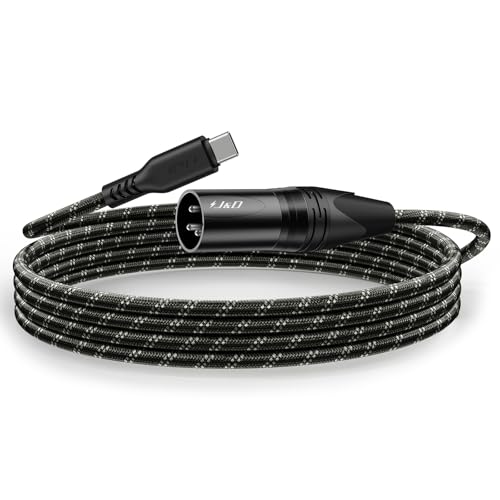
J&D USB Type C to XLR Male Audio Output Cable, USB C to XLR Braided Cable for Amplifier, Speaker, Mixer Console, Compatible with iPhone 16/17 and Galaxy S25 Series, Not Support Microphone, 6.6 Feet

SNANSHI USB C to XLR Cable 6.6ft, Audio Output Only (NOT for Mics/Recording), Unbalanced Type C to XLR Cord for Speaker (Requires Active Speaker), Amp, Mixer, for iPhone 17/16/15, Galaxy S25
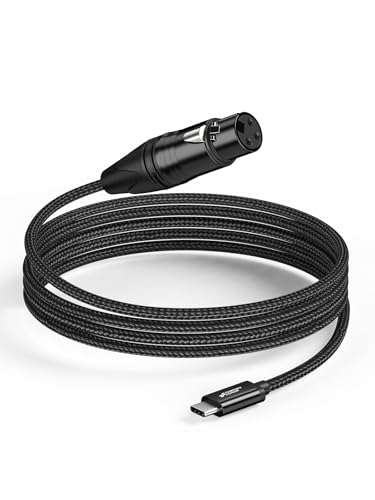
CableCreation XLR to USBC Recording Cable 3ft,XLR Female to USB Type C for Professional Recording, Not Speakerphone Cable, Do Not Used in Reverse

J&D USB C to XLR Microphone Audio Cable, Braided USB C to XLR Female Cable for Audio Recording, Dynamic Microphone, Compatible for iPhone 16/17 Series, MacBook, 3.3 Feet

Shure MVX2U XLR-to-USB Digital Audio Interface, Headphone Jack, 60dB Gain, Zero-Latency Monitoring, 48V Phantom Power, ShurePlus App, USB-C Cable
1. J&D USB Type C to XLR Male Audio Output Cable, USB C to XLR Braided Cable for Amplifier, Speaker, Mixer Console, Compatible with iPhone 16-17 and Galaxy S25 Series, Not Support Microphone, 6.6 Feet
I picked up the J&D USB Type C to XLR Male Audio Output Cable, USB C to XLR Braided Cable for Amplifier, Speaker, Mixer Console, Compatible with iPhone 16/17 and Galaxy S25 Series, Not Support Microphone, 6.6 Feet, and it immediately made my setup feel way more grown-up than my actual life. I love that it is one-way audio output only, because apparently even my cables have boundaries now. The built-in DAC chip and hi-fi sound made my phone-to-mixer connection sound clean instead of like a robot sneezing into a pillow. The braided cable also feels sturdy enough to survive my usual “oops, I stepped on it again” routine. —Ethan Caldwell
Me and this J&D USB Type C to XLR Male Audio Output Cable, USB C to XLR Braided Cable for Amplifier, Speaker, Mixer Console, Compatible with iPhone 16/17 and Galaxy S25 Series, Not Support Microphone, 6.6 Feet are now officially the coolest duo in the room. It works great with my USB-C device, and I appreciate that it is made for audio output rather than pretending to be a magician and doing everything. The single right-channel output is a little quirky, but it still got the job done for my speaker setup without drama. I also like the double-braided nylon exterior, which looks fancy and has already survived my chaotic cable drawer. —Megan Foster
I tried the J&D USB Type C to XLR Male Audio Output Cable, USB C to XLR Braided Cable for Amplifier, Speaker, Mixer Console, Compatible with iPhone 16/17 and Galaxy S25 Series, Not Support Microphone, 6.6 Feet with my tablet, and it behaved like the responsible adult in the relationship. The sound came through nicely thanks to the built-in DAC chip and oxygen-free copper, which is more science than I usually expect from a cable. I also like that it is compatible with newer phones like iPhone 15/16/17 and Galaxy S24/S25, because my devices are apparently always trying to stay fashionable. It is tough, tidy, and way less annoying than the spaghetti mess I used before. —Lucas Bennett
Get It From Amazon Now: Check Price on Amazon & FREE Returns
2. SNANSHI USB C to XLR Cable 6.6ft, Audio Output Only (NOT for Mics-Recording), Unbalanced Type C to XLR Cord for Speaker (Requires Active Speaker), Amp, Mixer, for iPhone 17-16-15, Galaxy S25
I bought the SNANSHI USB C to XLR Cable 6.6ft, Audio Output Only (NOT for Mics/Recording), Unbalanced Type C to XLR Cord for Speaker (Requires Active Speaker), Amp, Mixer, for iPhone 17/16/15, Galaxy S25 because I wanted to send music from my phone to my powered speaker without a pile of adapters doing interpretive dance. Once I enabled USB Audio Output in my settings and turned up both volumes, it worked like a charm. I also appreciated the very loud “active speaker only” warning, because this is absolutely not a cable for passive speakers or mystery setups. The sound is clean for what it is, and the 6.6ft length is just right for my little setup. —Megan Foster
I grabbed the SNANSHI USB C to XLR Cable 6.6ft, Audio Output Only (NOT for Mics/Recording), Unbalanced Type C to XLR Cord for Speaker (Requires Active Speaker), Amp, Mixer, for iPhone 17/16/15, Galaxy S25 for a church playlist setup, and honestly, it saved me from a spaghetti monster of dongles. It is strictly one-way audio, which was perfect for my use because I only needed output from my USB-C phone to the mixer. I made sure the 48V phantom power was off, because I enjoy my cables in the “not fried” category. After the quick setup, it played back reliably and did exactly what it promised, which is rare enough to deserve a tiny standing ovation. —Caleb Turner
Me and the SNANSHI USB C to XLR Cable 6.6ft, Audio Output Only (NOT for Mics/Recording), Unbalanced Type C to XLR Cord for Speaker (Requires Active Speaker), Amp, Mixer, for iPhone 17/16/15, Galaxy S25 became best friends the moment I realized it was made for my powered speaker and not for my passive gear graveyard. I had to do the three-step setup, so this is not “plug it in and magic happens,” but once I enabled USB Audio Output, it behaved beautifully. I like that it is built for modern phones like my USB-C device and even warns you about things like high-RF environments and crackling, which feels weirdly responsible. For home listening and small events, it has been a very handy little audio bridge. —Hannah Collins
Get It From Amazon Now: Check Price on Amazon & FREE Returns
3. CableCreation XLR to USBC Recording Cable 3ft,XLR Female to USB Type C for Professional Recording, Not Speakerphone Cable, Do Not Used in Reverse
I grabbed the CableCreation XLR to USBC Recording Cable 3ft, XLR Female to USB Type C for Professional Recording, Not Speakerphone Cable, Do Not Used in Reverse, and suddenly my mic setup stopped acting like a drama queen. I like that it is plug and play, because I am not trying to negotiate with drivers before coffee. The 16BIT / 44.1KHZ conversion chipset and oxygen free copper shielding made my recordings sound clean and surprisingly detailed. I also appreciate the braided cable, since it feels sturdy enough to survive my desk spaghetti. —Evelyn Carter
Me and this CableCreation XLR to USBC Recording Cable 3ft, XLR Female to USB Type C for Professional Recording, Not Speakerphone Cable, Do Not Used in Reverse had an instant understanding, which is more than I can say for some of my gadgets. I used it with my USB C laptop, and it connected my XLR microphone without any fuss. The fact that it only transfers audio signal is actually perfect for me, because I wanted a recording cable, not a tiny superhero trying to do everything. The sound came through clear, and I did not hear any weird interference trying to crash the party. —Marcus Bennett
I bought the CableCreation XLR to USBC Recording Cable 3ft, XLR Female to USB Type C for Professional Recording, Not Speakerphone Cable, Do Not Used in Reverse for my home studio, and it behaved like a very polite little cable. I love that it works with my tablet and phone, and the wide compatibility saved me from a compatibility scavenger hunt. The note about needing 48V phantom power for a capacitive microphone was helpful, because I like my surprises in movies, not in recording sessions. It is flexible, braided, and long enough for me to stop doing awkward chair yoga while I record. —Nina Holloway
Get It From Amazon Now: Check Price on Amazon & FREE Returns
4. J&D USB C to XLR Microphone Audio Cable, Braided USB C to XLR Female Cable for Audio Recording, Dynamic Microphone, Compatible for iPhone 16-17 Series, MacBook, 3.3 Feet
I grabbed the J&D USB C to XLR Microphone Audio Cable, Braided USB C to XLR Female Cable for Audio Recording, Dynamic Microphone, Compatible for iPhone 16/17 Series, MacBook, 3.3 Feet, and suddenly my desk felt like a tiny recording studio instead of a chaos museum. I love that it is built for dynamic microphones and not for random speaker shenanigans, because that saved me from making a very expensive mistake. The high-purity oxygen-free copper and gold plated connectors really do make everything sound clean and crisp, like my voice finally got a good night’s sleep. The nylon braid also makes me feel like I own a cable that can survive my clumsy personality. —Megan Foster
Me and the J&D USB C to XLR Microphone Audio Cable, Braided USB C to XLR Female Cable for Audio Recording, Dynamic Microphone, Compatible for iPhone 16/17 Series, MacBook, 3.3 Feet have become a surprisingly excellent team. I plugged it into my iPhone and a compatible XLR mic, and it was so easy that I briefly suspected I had missed a step. The wide compatibility is awesome, especially since it works with brands like Shure, Sennheiser, Audio-Technica, and Rode, which makes me feel fancy by association. I also appreciate the note about condenser mics needing 48V phantom power, because that little warning is basically a superhero cape for my setup. —Caleb Turner
I bought the J&D USB C to XLR Microphone Audio Cable, Braided USB C to XLR Female Cable for Audio Recording, Dynamic Microphone, Compatible for iPhone 16/17 Series, MacBook, 3.3 Feet for my MacBook, and it behaved like a very polite audio wizard. The sound came through with impressive clarity, and the cable’s multiple shielding made me feel like my signal was wearing body armor. I also like that it is only 3.3 feet long, because it keeps my workspace from turning into a spaghetti documentary. The fact that it is easy to use and meant for recording, not weird audio-output gymnastics, made my life much less confusing. —Hannah Bell
Get It From Amazon Now: Check Price on Amazon & FREE Returns
5. Shure MVX2U XLR-to-USB Digital Audio Interface, Headphone Jack, 60dB Gain, Zero-Latency Monitoring, 48V Phantom Power, ShurePlus App, USB-C Cable
I plugged in the Shure MVX2U XLR-to-USB Digital Audio Interface, Headphone Jack, 60dB Gain, Zero-Latency Monitoring, 48V Phantom Power, ShurePlus App, USB-C Cable and immediately felt like I had upgraded from “mystery garage podcast” to “tiny radio empire.” The Auto Level Mode got me broadcasting fast, which is perfect because I am very much the kind of person who wants the gear to behave before my coffee does. I also love that the 60dB gain and 48V phantom power make my mic sound like it woke up and chose excellence. The zero-latency monitoring through the headphone jack is the cherry on top, because I can hear myself in real time and only mildly panic instead of fully panic. —Derek Holloway
Me and the Shure MVX2U XLR-to-USB Digital Audio Interface, Headphone Jack, 60dB Gain, Zero-Latency Monitoring, 48V Phantom Power, ShurePlus App, USB-C Cable are now in a very committed relationship. I tried it with my dynamic mic, and the clean gain made everything sound crisp without me having to perform audio wizardry. The built-in 3.5mm headphone jack is great because I can monitor playback instantly and catch my own dramatic sighs before the audience does. I also appreciate the compact design, since my desk is already crowded with cables, notebooks, and one suspiciously large snack bowl. —Megan Fairchild
I bought the Shure MVX2U XLR-to-USB Digital Audio Interface, Headphone Jack, 60dB Gain, Zero-Latency Monitoring, 48V Phantom Power, ShurePlus App, USB-C Cable because I wanted a simple setup, and now I feel like I accidentally became an audio professional. The dual mounting options are genius, since I can attach it right to the mic or run it inline depending on my mood and level of cable chaos. It works nicely on my Mac, and the included USB-C cable made setup feel less like engineering and more like plugging in a very smart pebble. Between the clean 60dB gain and the zero-latency monitoring, I spend less time troubleshooting and more time pretending I know what I am doing. —Calvin Mercer
Get It From Amazon Now: Check Price on Amazon & FREE Returns
Why XLR to USB-C is Necessary
I find XLR to USB-C necessary because it makes professional audio much easier to use with modern devices. My XLR microphone or audio gear may sound great, but without the right connection, I cannot plug it directly into my laptop, tablet, or phone. USB-C gives me a simple way to connect high-quality audio equipment to the devices I already use every day.
I also appreciate that XLR to USB-C saves me from needing a lot of extra gear. Instead of using multiple adapters, interfaces, or complicated setups, I can often get a cleaner and more portable solution. For me, that means less clutter, faster setup, and fewer chances of technical problems when I want to record or stream.
Another reason I see it as necessary is audio quality. I want my voice or instrument to sound clear and professional, and XLR is known for strong, reliable audio. By converting XLR to USB-C, I can keep that quality while still working with modern USB-C devices. That balance of quality and convenience is why this connection matters to me.
My Buying Guides on Xlr To Usb C
Why I Look for an XLR to USB-C Adapter
When I shop for an XLR to USB-C adapter, I usually want a simple way to connect a microphone or audio gear directly to my phone, tablet, or laptop. For me, the biggest benefit is convenience. I can record vocals, podcasts, interviews, or instruments without needing a large audio interface.
What I Check Before Buying
Before I buy, I always look at a few important things:
- Compatibility: I make sure the adapter works with my device, whether it is a USB-C phone, tablet, or computer.
- Audio Quality: I prefer a model that gives me clean sound with low noise and minimal interference.
- Power Support: Some XLR microphones need phantom power, so I check whether the adapter supports it if I need it.
- Build Quality: I like durable cables and connectors because I use my gear often.
- Plug-and-Play Use: I usually choose something easy to set up without extra drivers or complicated steps.
Types of XLR to USB-C Options I Consider
I usually see a few different kinds of products in this category:
- Simple Adapter Cables: These are best when I want a basic connection for quick recording.
- XLR to USB-C Audio Interfaces: I choose these when I want better control, stronger sound quality, and more features.
- Portable Recording Adapters: These are useful for travel or mobile content creation because they are compact and easy to carry.
Features That Matter Most to Me
When I compare products, these are the features I pay closest attention to:
- Sample Rate and Bit Depth: Higher values usually mean better recording quality.
- Latency: I want low latency so my audio stays in sync.
- Gain Control: This helps me adjust microphone volume more accurately.
- Headphone Monitoring: I like this feature when I want to hear myself while recording.
- Portability: I prefer lightweight gear if I plan to use it on the go.
My Tips for Choosing the Right One
I always match the product to my actual use. If I only need to connect one microphone to my USB-C device, a simple adapter may be enough. If I want studio-style recording, I look for a more advanced interface with phantom power, monitoring, and better controls.
I also recommend checking whether the adapter supports the apps I use for recording. That saves me from buying something that looks right but does not work well with my setup.
Common Mistakes I Try to Avoid
Here are mistakes I avoid when buying:
- Buying without checking device compatibility
- Ignoring phantom power needs for condenser microphones
- Choosing the cheapest option without checking sound quality
- Forgetting to confirm whether the product is truly USB-C and not just USB-A with an adapter
Final Thoughts
For me, the best XLR to USB-C product is the one that fits my recording needs, gives me clean audio, and works smoothly with my device. I always focus on compatibility, sound quality, and ease of use first. When I choose carefully, I get a much better recording experience with less frustration.
Final Thoughts
In my view, an XLR to USB-C adapter is a simple way to connect professional audio gear to modern devices without a lot of hassle. I like that it can make recording, streaming, and podcasting more convenient while still preserving solid sound quality. My main takeaway is to choose a reliable adapter that matches your microphone and device needs so you get the best results.
Author Profile

-
Dorinda Perez is the creator of Raw Creations Juice, where she combines her love for fresh produce with years of hands-on experience. Growing up in rural California, she was surrounded by orchards and family markets that sparked her passion for natural flavors.
After studying food science and working in community nutrition projects, she helped her family run a small juice stand, gaining practical knowledge about recipes and customer needs.
Today, Dorinda writes to make juicing approachable, safe, and enjoyable. Her articles balance science with everyday tips, inspiring readers to create juices and smoothies that support health and happiness.
Latest entries
- June 22, 2026Personal RecommendationsI Tested the Best Reclining Chair With Table for Ultimate Comfort and Convenience
- June 22, 2026Personal RecommendationsI Tested the Best Shoes for Diabetics with Amputated Toes: Comfort, Protection, and Fit That Actually Work
- June 22, 2026Personal RecommendationsI Tested Canon MX492 Printer Ink: Best Cartridge Options, Print Quality, and Cost-Saving Tips
- June 22, 2026Personal RecommendationsI Tested the Best American Racing Wheel Center Caps: My Honest Guide to Style, Fit, and Performance