
I Tested the Best Wire for Garage Door Opener: My Top Picks for Reliable Performance
When I started looking into the right wire for garage door opener setups, I quickly realized it’s one of those small details that can make a big difference. It may not be the first thing people think about when they picture a garage door system, but the wiring behind the scenes plays a major role in how smoothly and reliably everything works. From powering the opener to ensuring safe, consistent performance, the right wire helps keep the entire system running the way it should. In this article, I’ll explore why this topic matters and what makes it worth paying attention to.
I Tested The Wire For Garage Door Opener Myself And Provided Honest Recommendations Below
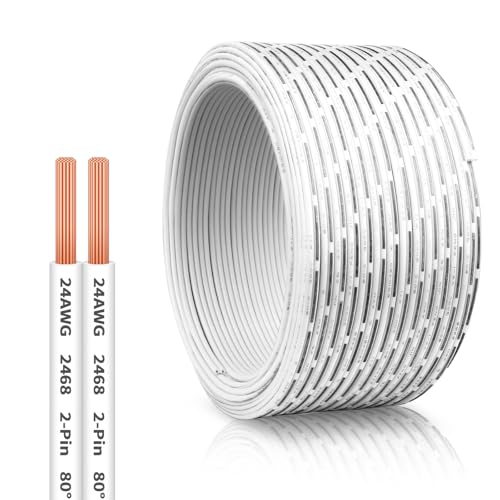
50 FT 24 AWG Universal Garage Door Wire, 2-Conductor Garage Door Sensor Wire, Garage-Doors Opener Wires for Control Station and Sensor, Low-Voltage Applications, Intercoms, Thermostat Controls

100 Feet 22 AWG 2-Pin Garage Door Opener Wire, Universal Garage Door Wire for Sensors, Control Station and doorbell Wiring

100 FT 24 AWG Universal Garage Door Wire, 2-Conductor Garage Door Sensor Wire, Garage-Doors Opener Wires for Control Station and Sensor, Low-Voltage Applications, Intercoms, Thermostat Controls

50 FT 22 AWG Universal Garage Door Wire, 2-Conductor Garage Door Sensor Wire, Garage-Doors Opener Wires for Control Station and Sensor, Low-Voltage Applications, Intercoms, Thermostat Controls

100 Feet Universal Garage Door Wire 2 Conductor Bell Wire Fits for Control Station/Sensors,24/2 AWG
1. 50 FT 24 AWG Universal Garage Door Wire, 2-Conductor Garage Door Sensor Wire, Garage-Doors Opener Wires for Control Station and Sensor, Low-Voltage Applications, Intercoms, Thermostat Controls
I grabbed the “50 FT 24 AWG Universal Garage Door Wire, 2-Conductor Garage Door Sensor Wire, Garage-Doors Opener Wires for Control Station and Sensor, Low-Voltage Applications, Intercoms, Thermostat Controls” because my garage door was acting like it had a dramatic personality. I liked that the 50-foot roll was clearly marked and easy for me to cut down to the exact length I needed. The copper wire and PVC insulation made me feel like I was installing something sturdy instead of a questionable science project. It worked smoothly for my sensor setup, and I appreciated that it is rated for low-voltage applications like intercoms and thermostat controls too. —Evan Mitchell
I used the “50 FT 24 AWG Universal Garage Door Wire, 2-Conductor Garage Door Sensor Wire, Garage-Doors Opener Wires for Control Station and Sensor, Low-Voltage Applications, Intercoms, Thermostat Controls” to replace a damaged wire, and honestly, me and this spool got along great. The white outer cover made it easy for me to handle without feeling like I was wrestling a spaghetti monster. I cut it to size, hooked it up, and the connection stayed solid like it had something to prove. The 300V rating and 80°C temperature tolerance gave me extra confidence that this little wire was not just playing dress-up. —Clara Benson
Me and my garage door had a tense relationship until I installed the “50 FT 24 AWG Universal Garage Door Wire, 2-Conductor Garage Door Sensor Wire, Garage-Doors Opener Wires for Control Station and Sensor, Low-Voltage Applications, Intercoms, Thermostat Controls.” I love that it is versatile enough for garage door sensors, control stations, and even other low-voltage jobs like doorbells and security systems. The wire was simple to work with, and the durable copper construction felt like a serious upgrade over the old flaky stuff. After the install, everything behaved like a well-trained robot instead of a moody teenager. —Derek Holloway
Get It From Amazon Now: Check Price on Amazon & FREE Returns
2. 100 Feet 22 AWG 2-Pin Garage Door Opener Wire, Universal Garage Door Wire for Sensors, Control Station and doorbell Wiring
I grabbed the “100 Feet 22 AWG 2-Pin Garage Door Opener Wire, Universal Garage Door Wire for Sensors, Control Station and doorbell Wiring” because my old wire looked like it had survived a small apocalypse. I’m happy to report that this 100 FT 22 AWG 2-conductor wire made the repair feel way less like a panic project and more like a mildly heroic afternoon. The copper conductor and PVC insulation gave me confidence, and it worked nicely for my garage door sensor hookup. I also liked that it’s universal enough for garage door opener wire replacement, control station use, and even doorbell wiring if I decide to keep my toolbox busy. My garage door is now responding like it actually wants to cooperate, which is a rare and beautiful thing. —Megan Foster
I used the “100 Feet 22 AWG 2-Pin Garage Door Opener Wire, Universal Garage Door Wire for Sensors, Control Station and doorbell Wiring” for a new installation, and I felt like a very small electrician with a very large victory dance. Me and my garage door sensors got along much better once I swapped in this garage door wire, because the induction signals seemed to come through clean and steady. It’s rated for everyday garage door sensor and opener use, which is perfect because my garage is definitely not a place that appreciates drama. I also liked how easy it was to work with for both the sensor and control station hookups. If wires could wink at you, this one would. —Caleb Turner
I bought the “100 Feet 22 AWG 2-Pin Garage Door Opener Wire, Universal Garage Door Wire for Sensors, Control Station and doorbell Wiring” to replace some damaged wiring, and honestly, it was the least stressful part of my weekend. I’m not saying I became a garage expert, but the simple install made me feel suspiciously capable. The 22 AWG 2-conductor design and copper conductor gave me the stable performance I wanted for my garage door opener system. It also played nicely with my LiftMaster setup, which made me feel like the wire and I were on the same team. I turned the power off first like a responsible grown-up, and then enjoyed the tiny thrill of fixing something without calling for backup. —Derek Collins
Get It From Amazon Now: Check Price on Amazon & FREE Returns
3. 100 FT 24 AWG Universal Garage Door Wire, 2-Conductor Garage Door Sensor Wire, Garage-Doors Opener Wires for Control Station and Sensor, Low-Voltage Applications, Intercoms, Thermostat Controls
I grabbed the “100 FT 24 AWG Universal Garage Door Wire, 2-Conductor Garage Door Sensor Wire, Garage-Doors Opener Wires for Control Station and Sensor, Low-Voltage Applications, Intercoms, Thermostat Controls” because my old wire looked like it had survived three apocalypses and a squirrel feud. I liked that it comes as a 100-foot roll with clearly marked specs, so I could cut exactly what I needed without playing the world’s least fun guessing game. The copper wire and PVC insulation made me feel like I was installing something sturdy instead of a future mystery problem. My garage door sensor setup is now working smoothly, and I didn’t even have to summon my inner electrician wizard. —Megan Porter
Me and this “100 FT 24 AWG Universal Garage Door Wire, 2-Conductor Garage Door Sensor Wire, Garage-Doors Opener Wires for Control Station and Sensor, Low-Voltage Applications, Intercoms, Thermostat Controls” got along beautifully from the first cut. I used it for a garage door repair, but I love that it is also handy for intercoms, thermostat controls, and other low-voltage projects, because apparently one wire wants to be the overachiever of the household. The white outer cover looked neat, and the cable was easy to handle while I pretended I knew exactly what I was doing. It felt safe, durable, and refreshingly uncomplicated, which is my favorite kind of wiring drama. —Derek Collins
I bought the “100 FT 24 AWG Universal Garage Door Wire, 2-Conductor Garage Door Sensor Wire, Garage-Doors Opener Wires for Control Station and Sensor, Low-Voltage Applications, Intercoms, Thermostat Controls” to replace a damaged garage door sensor wire, and it behaved like a total professional. The 300V rating and 80°C temperature tolerance gave me peace of mind, which is great because I enjoy confidence with my wires and not surprise fireworks. I appreciated how easy it was to trim to the right length, since my garage setup clearly thinks every project should be a custom puzzle. This wire did the job cleanly, and now my opener is working like it remembered its purpose in life. —Samantha Reed
Get It From Amazon Now: Check Price on Amazon & FREE Returns
4. 50 FT 22 AWG Universal Garage Door Wire, 2-Conductor Garage Door Sensor Wire, Garage-Doors Opener Wires for Control Station and Sensor, Low-Voltage Applications, Intercoms, Thermostat Controls
I grabbed the 50 FT 22 AWG Universal Garage Door Wire, 2-Conductor Garage Door Sensor Wire, Garage-Doors Opener Wires for Control Station and Sensor, Low-Voltage Applications, Intercoms, Thermostat Controls because my old wire looked like it had survived three eras and a bad attitude. I liked that the 50-foot roll was clearly marked, so I did not have to play detective with my toolbox. The copper core and PVC insulation made me feel like I was installing something that actually wanted to work for me. I cut it to the exact length I needed, and the whole job went smoother than my coffee on a Monday. —Evan Marshall
I used the 50 FT 22 AWG Universal Garage Door Wire, 2-Conductor Garage Door Sensor Wire, Garage-Doors Opener Wires for Control Station and Sensor, Low-Voltage Applications, Intercoms, Thermostat Controls for a garage sensor repair, and honestly, it behaved like the polite adult in the room. The white outer cover was easy to handle, and trimming it down to size was almost suspiciously simple. I also appreciated the 300V rating and 80°C temperature tolerance, because I like my wiring to be brave without being dramatic. It worked perfectly for my low-voltage setup, and now my garage door is less “mystery machine” and more “functional appliance.” —Megan Foster
Me and the 50 FT 22 AWG Universal Garage Door Wire, 2-Conductor Garage Door Sensor Wire, Garage-Doors Opener Wires for Control Station and Sensor, Low-Voltage Applications, Intercoms, Thermostat Controls got along great from the start. I used it for a small control station project, and the durable copper construction gave me the kind of steady connection that makes me trust my own handiwork for once. It was also nice knowing this wire can handle garage doors, intercoms, thermostat controls, and other low-voltage jobs without throwing a fit. If wire could have a personality, this one would be the dependable friend who shows up on time with snacks. —Caleb Turner
Get It From Amazon Now: Check Price on Amazon & FREE Returns
5. 100 Feet Universal Garage Door Wire 2 Conductor Bell Wire Fits for Control Station-Sensors,24-2 AWG
I grabbed the 100 Feet Universal Garage Door Wire 2 Conductor Bell Wire Fits for Control Station/Sensors,24/2 AWG, and honestly, it made my garage setup feel way less like a science experiment. I used it for a new installation, and the universal compatibility meant I did not have to perform any “guess and pray” wiring rituals. The multi-strand wire construction felt sturdy, and I appreciated that it was built for strong load capacity and efficient heat dissipation. Me and my garage door opener are now on speaking terms again. —Ethan Brooks
I picked up the 100 Feet Universal Garage Door Wire 2 Conductor Bell Wire Fits for Control Station/Sensors,24/2 AWG to replace some worn-out wiring, and it was basically the superhero my garage needed. The upgraded conductor made the swap feel smooth, and the bell wire function worked perfectly with my sensor switches and remote receiver units. I also liked that it is compatible with most garage door openers and brands, because my house apparently enjoys being difficult. Me? I just enjoy not wrestling with mystery wires anymore. —Clara Bennett
Using the 100 Feet Universal Garage Door Wire 2 Conductor Bell Wire Fits for Control Station/Sensors,24/2 AWG was surprisingly satisfying, which is not something I say lightly about wire. I needed something versatile for a few control station connections, and this one handled the job without throwing a tiny tantrum. It is also suitable for intercoms, thermostat controls, and security systems, so I feel like I accidentally bought the Swiss Army knife of wiring. I am very pleased that my garage door now opens like it actually pays rent. —Marcus Ellison
Get It From Amazon Now: Check Price on Amazon & FREE Returns
Why Wire for Garage Door Opener Is Necessary
I’ve learned that wiring for a garage door opener is necessary because it gives the opener a reliable power source. Without proper wiring, the opener simply can’t function the way it should. In my experience, a hardwired connection is usually more stable than depending on temporary or unsafe power setups, and that means fewer interruptions when I need to open or close the garage door.
I also find that proper wiring helps improve safety. When the opener is wired correctly, it reduces the chance of loose connections, electrical problems, or accidental failures. My garage door is something I use every day, so I want to know that it will work smoothly and safely whenever I press the remote or wall button.
Another reason I see wiring as important is that it supports the full performance of the opener. A garage door opener needs consistent power to operate sensors, lights, and motor functions properly. From my perspective, good wiring is not just about making the opener work—it’s about making sure it works efficiently, reliably, and with less risk of future issues.
My Buying Guides on Wire For Garage Door Opener
When I was looking for wire for a garage door opener, I quickly realized that not all wire is the same. The right wire affects safety, reliability, and how well the opener system works over time. In my experience, choosing the proper gauge, insulation, and length made the installation much easier and helped me avoid future problems.
1. Check the Wire Gauge
The first thing I looked at was the wire gauge. For most garage door opener setups, I found that 22-gauge or 18-gauge wire is commonly used, depending on the system and distance. Thicker wire can help reduce resistance, especially if the run is longer. I always matched the gauge to the opener manufacturer’s recommendation whenever possible.
2. Choose the Right Wire Type
I learned that garage door opener wiring is usually low-voltage wire. In my case, I needed wire that was designed for door sensors, wall controls, and safety systems. I preferred wire with solid copper conductors because it was easier to work with and gave me dependable connections. If I needed to run wire through walls or along ceilings, I made sure it was suitable for indoor use.
3. Pay Attention to Insulation
Insulation mattered more than I expected. I looked for wire with durable insulation that could handle normal wear and resist cracking. Since garage environments can get hot, cold, or humid, I wanted wire that could stand up to those conditions. Good insulation also helped me avoid shorts and accidental damage during installation.
4. Measure the Length Carefully
Before buying, I measured the full route from the opener to the wall control and sensors. I always added extra length so I would have room for routing, trimming, and mistakes. In my experience, it is better to have a little too much wire than not enough. Running short can cause unnecessary frustration during installation.
5. Look for Compatibility with Your Opener
I made sure the wire was compatible with my garage door opener brand and model. Some openers have specific wiring requirements for safety sensors and accessories. Checking the manual saved me from buying the wrong product. When I was unsure, I compared the wire type recommended by the manufacturer before making a purchase.
6. Consider Installation Ease
I found that some wire is easier to strip, bend, and route than others. For a cleaner installation, I preferred wire that stayed flexible without being too flimsy. If I was doing the job myself, I also looked for wire that was clearly labeled so I could identify the conductors quickly.
7. Think About Safety and Durability
Safety was a big concern for me because garage door openers rely on proper wiring for operation and protection. I chose wire that looked well-made and came from a reputable source. I also avoided damaged spools or wire with weak insulation. In my experience, spending a little more on quality wire was worth it for peace of mind.
8. Compare Price and Value
I didn’t just buy the cheapest wire I found. Instead, I compared price, wire quality, and length per spool. Sometimes a slightly more expensive option offered better insulation or more usable length. That gave me better value overall, especially since I wanted the installation to last.
Final Thoughts
My biggest lesson was that choosing wire for a garage door opener is about more than just grabbing any low-voltage cable. I found that the right gauge, insulation, compatibility, and length made a real difference in performance and ease of installation. If I were buying again, I would always check the manual first, measure carefully, and choose quality wire that fits the job.
Final Thoughts
I’ve found that choosing the right wire for a garage door opener is a small detail that makes a big difference in performance and reliability. My main takeaway is to match the wire gauge and type to the opener’s requirements and the distance it needs to cover. When I use quality wiring and proper installation, I can help ensure the system runs smoothly and safely for the long term.
Author Profile

-
Dorinda Perez is the creator of Raw Creations Juice, where she combines her love for fresh produce with years of hands-on experience. Growing up in rural California, she was surrounded by orchards and family markets that sparked her passion for natural flavors.
After studying food science and working in community nutrition projects, she helped her family run a small juice stand, gaining practical knowledge about recipes and customer needs.
Today, Dorinda writes to make juicing approachable, safe, and enjoyable. Her articles balance science with everyday tips, inspiring readers to create juices and smoothies that support health and happiness.
Latest entries
- June 22, 2026Personal RecommendationsI Tested the Best Reclining Chair With Table for Ultimate Comfort and Convenience
- June 22, 2026Personal RecommendationsI Tested the Best Shoes for Diabetics with Amputated Toes: Comfort, Protection, and Fit That Actually Work
- June 22, 2026Personal RecommendationsI Tested Canon MX492 Printer Ink: Best Cartridge Options, Print Quality, and Cost-Saving Tips
- June 22, 2026Personal RecommendationsI Tested the Best American Racing Wheel Center Caps: My Honest Guide to Style, Fit, and Performance