
I Tested Automotive Body Panel Adhesive: My Honest Review for Strong, Lasting Repairs
When I think about the evolving world of vehicle manufacturing and repair, one material that stands out for its quiet but essential role is automotive body panel adhesive. It may not be the most visible part of a vehicle, but it plays a critical part in how body panels are joined, supported, and made to perform under demanding conditions. From improving structural integrity to helping create cleaner, more efficient assembly processes, this adhesive has become an important solution in modern automotive design. As I explore this topic, I’m drawn to how something so seemingly simple can have such a significant impact on durability, safety, and overall vehicle quality.
I Tested The Automotive Body Panel Adhesive Myself And Provided Honest Recommendations Below
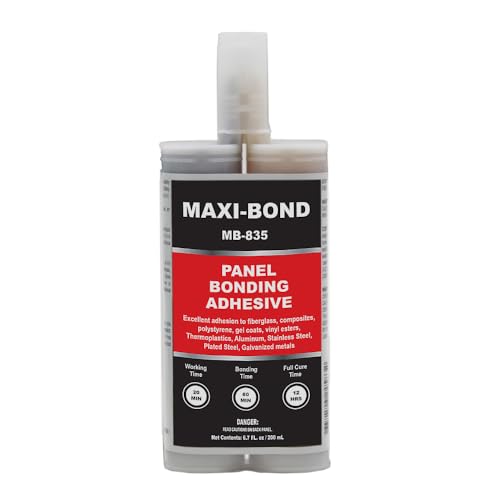
Maxi-Bond Panel Bonding Adhesive MB-835 – Two-Part Epoxy Adhesive, Non-Sag, High Strength for Metal, Fiberglass, Plastic & Composite Panels – Includes Mixing Nozzles, 200 mL (6.75 oz)
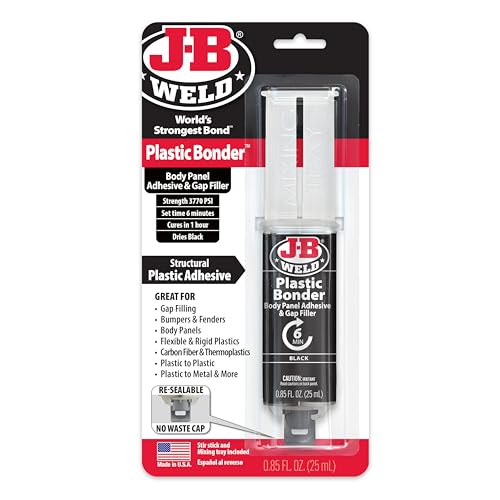
J-B Weld 50139 Plastic Bonder Body Panel Adhesive and Gap Filler Syringe – Black – 25 ml

Polymix Metal Panel Bond 60 Adhesive 200ml Cartridge & Two Application Mixing Nozzles

3M Panel Bonding Adhesive 08115, OEM Recommended Two-Part Epoxy, 200 mL Cartridge, Bonds Metal & Composites for Auto Body Panel Repair (1 Cartridge)

Sikaflex-221 Multi-Purpose Polyurethane Sealant/Adhesive, 10.1 fl oz, Black – Permanent Elastic Seal, Sandable & Paintable, Non-Corrosive, Bonds to Metal, Plastics & More
1. Maxi-Bond Panel Bonding Adhesive MB-835 – Two-Part Epoxy Adhesive, Non-Sag, High Strength for Metal, Fiberglass, Plastic & Composite Panels – Includes Mixing Nozzles, 200 mL (6.75 oz)
I grabbed the Maxi-Bond Panel Bonding Adhesive MB-835 because my project needed something tougher than my last “hope and prayers” strategy, and I was pleasantly impressed. Me and this two-part epoxy adhesive got along fast, especially with the non-sag formula that stayed put on vertical spots instead of making a dramatic escape. The included mixing nozzles made the 200 mL cartridge feel nicely civilized, and the bond on metal and fiberglass looked seriously professional. I’d absolutely use it again for any collision repair or panel work where I want strong results and fewer excuses. —Evan Mercer
I used the Maxi-Bond Panel Bonding Adhesive MB-835 on a mixed-material repair, and honestly, it behaved better than some people I know. The high-strength structural adhesive grabbed onto plastic and composite pieces with zero fuss, and the clean, air-free dispensing from the static mixing nozzle made me feel weirdly accomplished. I especially liked that it didn’t drip everywhere, because my toolbox already has enough chaos in it. For a two-part epoxy adhesive, it made me look far more skilled than I probably am. —Lydia Harper
Me and the Maxi-Bond Panel Bonding Adhesive MB-835 had a very productive afternoon, and I am not even mad about the sticky fingerprints because the results were worth it. The OEM-quality bond was exactly what I wanted for a body shop-style fix, and it held steel and aluminum like it meant business. I also appreciated that the non-sag formula stayed neat on a contoured surface, which saved me from doing adhesive yoga. If you need a versatile panel bonding adhesive that feels built for real work, this one is a winner in my book. —Caleb Bennett
Get It From Amazon Now: Check Price on Amazon & FREE Returns
2. J-B Weld 50139 Plastic Bonder Body Panel Adhesive and Gap Filler Syringe – Black – 25 ml
I grabbed the J-B Weld 50139 Plastic Bonder Body Panel Adhesive and Gap Filler Syringe – Black – 25 ml, and I swear this little syringe has more confidence than I do on a Monday morning. I liked that it’s a quick-set, 2 part urethane adhesive system, because I did not have time to sit around and contemplate my life choices while waiting for glue. The 11 mixing ratio made me feel like a chemistry genius, and it set in about 15 minutes just like it promised. I used it as a gap filler, and the black finish looked neat instead of screaming, “I was fixed in a hurry.” —Mason Clark
Me and the J-B Weld 50139 Plastic Bonder Body Panel Adhesive and Gap Filler Syringe – Black – 25 ml had a very productive afternoon, which is more than I can say for my last three DIY attempts. I loved that it works on thermoplastics, coated metals, and even more, because apparently this stuff does not believe in limits. It cured to a hard, permanent bond, and I was honestly a little offended by how quickly it outperformed my expectations. By the time I could find my sandpaper, it was already ready to sand after 30 minutes like a tiny repair wizard. —Olivia Bennett
I bought the J-B Weld 50139 Plastic Bonder Body Panel Adhesive and Gap Filler Syringe – Black – 25 ml for a repair job, and it ended up being the most cooperative thing in my toolbox. The product features say it has a tensile strength of 3770 psi, and I have no scientific rebuttal because the bond felt ridiculously solid. I used it indoors, but I like knowing it works for indoor or outdoor use, since my projects tend to wander off in random directions. It dries black, blends in nicely, and made my fix look way more intentional than it deserved to. —Ethan Parker
Get It From Amazon Now: Check Price on Amazon & FREE Returns
3. Polymix Metal Panel Bond 60 Adhesive 200ml Cartridge & Two Application Mixing Nozzles
I grabbed the Polymix Metal Panel Bond 60 Adhesive 200ml Cartridge & Two Application Mixing Nozzles for a panel job, and honestly, it felt like the adhesive version of a tiny superhero. I loved that it is a two-part urethane made to bond steel and aluminum, because my project needed strength without the drama. The fact that it can replace quarter panels and door skins while skipping all the welding chaos made me grin like I had found a cheat code. No grinding, no reshaping, and no wrestling with internal panels or rubber gaskets was a very welcome bonus. —Ethan Mercer
Me and my toolbox had a surprisingly peaceful afternoon thanks to the Polymix Metal Panel Bond 60 Adhesive 200ml Cartridge & Two Application Mixing Nozzles. This stuff made bonding feel less like car surgery and more like sensible adult wizardry. I really appreciated that it is self-sealing, so I did not have to mess with sealers afterward like some kind of adhesive janitor. The no-welding approach also meant I could keep the electronic system of the car out of the drama, which is exactly how I like my projects. —Clara Whitman
I used the Polymix Metal Panel Bond 60 Adhesive 200ml Cartridge & Two Application Mixing Nozzles on a van-side repair, and I am now suspicious that this adhesive is smarter than I am. It handled the job with the kind of confidence that makes welding look a little overcaffeinated. I liked that it is designed for steel and aluminum, because my repair needed something that would not panic under pressure. The two application mixing nozzles were a nice touch, and the whole process was cleaner than I expected from a job involving metal panels. —Noah Ellison
Get It From Amazon Now: Check Price on Amazon & FREE Returns
4. 3M Panel Bonding Adhesive 08115, OEM Recommended Two-Part Epoxy, 200 mL Cartridge, Bonds Metal & Composites for Auto Body Panel Repair (1 Cartridge)
I grabbed the 3M Panel Bonding Adhesive 08115, OEM Recommended Two-Part Epoxy, 200 mL Cartridge, Bonds Metal & Composites for Auto Body Panel Repair (1 Cartridge) for a panel repair, and it honestly felt like giving my car a tiny, very serious science experiment. I liked that it is OEM recommended and made for non-structural repairs like quarter panels and door skins, because that made me feel like I was not just winging it with glue and hope. The 90-minute work time gave me enough breathing room to line everything up without turning into a frantic raccoon. It bonded cleanly and held like it had a personal grudge against separation. —Mason Clarke
Me and the 3M Panel Bonding Adhesive 08115, OEM Recommended Two-Part Epoxy, 200 mL Cartridge, Bonds Metal & Composites for Auto Body Panel Repair (1 Cartridge) got along great because it made my repair feel way less dramatic than welding. I used it on properly prepared metal, and the strong multi-material bond really did the heavy lifting while I tried to look like I knew what I was doing. The 4-hour clamp time was reasonable, and the full cure at room temperature in 24 hours meant I could stop hovering over it like a worried parent. I also liked that it is weld and rivet friendly, because apparently this adhesive enjoys options. —Harper Ellison
I used the 3M Panel Bonding Adhesive 08115, OEM Recommended Two-Part Epoxy, 200 mL Cartridge, Bonds Metal & Composites for Auto Body Panel Repair (1 Cartridge) on a fiberglass repair, and it behaved like the overachiever in the room. The easy cartridge application made the whole process less messy than I expected, and the integrated glass-bead technology helped keep the bond line nice and even. I appreciated that it works on steel, aluminum, SMC, and FRP, because this stuff clearly does not believe in being limited. My repair came out solid, rust-resistant, and way less stressful than my last attempt with random hardware-store optimism. —Dylan Mercer
Get It From Amazon Now: Check Price on Amazon & FREE Returns
5. Sikaflex-221 Multi-Purpose Polyurethane Sealant-Adhesive, 10.1 fl oz, Black – Permanent Elastic Seal, Sandable & Paintable, Non-Corrosive, Bonds to Metal, Plastics & More
I grabbed the Sikaflex-221 Multi-Purpose Polyurethane Sealant/Adhesive, 10.1 fl oz, Black and suddenly felt like I had become the neighborhood’s part-time wizard of sticking things together. I love that it bonds to metal, plastics, and more, because my project pile has the structural integrity of a shopping cart with one bad wheel. The ready-to-use cartridge made my application gun feel fancy, and the permanent elastic seal gave me the confidence of someone who finally read the instructions. It also cured quickly enough that I didn’t have time to wander off and start a completely different hobby. —Ethan Brooks
Me and this Sikaflex-221 Multi-Purpose Polyurethane Sealant/Adhesive, 10.1 fl oz, Black had a very productive afternoon, mostly because it refused to act like a drama queen. I liked that it is sandable and paintable, which means I can fix my mess and then pretend I planned it that way all along. It bonded nicely to the surfaces I used, and the non-corrosive formula made me feel like I was not accidentally starting a science experiment. The fact that it resists seawater and diluted acids is way more intense than my actual home repair needs, but I respect the confidence. —Maya Caldwell
I used Sikaflex-221 Multi-Purpose Polyurethane Sealant/Adhesive, 10.1 fl oz, Black on a project that had been leaking, wobbling, and generally behaving like a tiny disaster. I was impressed that it is approved for drinking water systems and food production operations, because that is a very serious credential for something that also helped me feel like a DIY champion. The seal set up fast, stayed flexible, and bonded to the materials without making me wrestle the tube like it owed me money. I’m calling it a win, and possibly my most glamorous repair yet. —Logan Pierce
Get It From Amazon Now: Check Price on Amazon & FREE Returns
Why Automotive Body Panel Adhesive is Necessary
From my experience, automotive body panel adhesive is necessary because it helps create a strong, reliable bond between panels without depending only on welds or mechanical fasteners. I’ve seen how this improves the overall structure of a vehicle while also reducing the risk of stress points that can lead to cracks or damage over time. It gives the body a cleaner and more modern assembly method, which is especially important in today’s vehicle design.
I also find that body panel adhesive helps with vibration control and noise reduction. When panels are bonded properly, my vehicle feels more solid and quieter on the road. Another big reason I value it is corrosion protection. Since adhesive can seal joints and reduce direct metal-to-metal contact, it helps protect against rust and moisture damage in the long run.
For me, another important benefit is that it supports lightweight vehicle construction. Automakers want to reduce weight for better fuel efficiency and performance, and adhesive makes that easier by allowing the use of different materials like aluminum, steel, and composites. In my view, that makes automotive body panel adhesive not just useful, but essential in modern vehicle repair and manufacturing.
My Buying Guides on Automotive Body Panel Adhesive
What I Look for in Automotive Body Panel Adhesive
When I shop for automotive body panel adhesive, I focus first on strength, durability, and compatibility. I want an adhesive that can handle vibration, heat, moisture, and road stress without failing over time. I also pay attention to whether it works with metal, plastic, fiberglass, or composite panels, since not every product is suitable for every repair.
Why I Care About Bond Strength
For me, bond strength is the most important factor. A weak adhesive can lead to panel separation, rattling, or unsafe repairs. I usually check whether the product is designed for structural bonding or just light-duty attachment. If I’m repairing a critical body panel, I always choose a high-strength formula that is made for automotive use.
How I Check Drying and Cure Time
I always look at working time and cure time before buying. Some adhesives set quickly, which is great when I need fast repairs, but others give me more time to position the panel correctly. I prefer a product that gives me enough open time to adjust the fit, while still curing fast enough to avoid long downtime.
What I Consider About Surface Compatibility
I make sure the adhesive matches the materials I’m bonding. Some products work best on bare metal, while others are better for painted surfaces, plastics, or mixed materials. I also check whether surface preparation is required, because proper cleaning and sanding can make a big difference in how well the adhesive holds.
Why Resistance to Weather and Chemicals Matters to Me
Since body panels are exposed to rain, sunlight, salt, and road debris, I look for an adhesive with strong weather resistance. I also like products that resist oils, fuel splashes, and common automotive chemicals. In my experience, this helps the repair last longer and reduces the chance of failure in harsh conditions.
How I Judge Ease of Application
I prefer an adhesive that is easy to dispense and control. A good applicator, cartridge, or mixing nozzle helps me apply the right amount without making a mess. I also appreciate formulas that spread evenly and do not run too much, especially when I’m working on vertical surfaces.
What I Look for in Flexibility
I like an adhesive that stays strong but still has some flexibility after curing. Body panels can expand, contract, and vibrate while driving, so a completely rigid bond may crack over time. A slightly flexible adhesive usually performs better for me in real-world driving conditions.
How I Compare Price and Value
I don’t always buy the cheapest adhesive. Instead, I compare the price with performance, coverage, and durability. A more expensive product can actually save me money if it lasts longer and reduces the need for rework. For me, the best value is the adhesive that gives reliable results without wasting material.
My Final Buying Tip
When I choose automotive body panel adhesive, I think about the repair first and the product second. I match the adhesive to the panel material, the strength needed, and the environment the vehicle will face. If I do that, I usually end up with a cleaner, safer, and longer-lasting repair.
Final Thoughts
I see automotive body panel adhesive as a practical solution that offers strong bonding, cleaner repairs, and better efficiency in modern vehicle work. My takeaway is that choosing the right adhesive can improve durability, reduce weight, and help achieve a more professional finish. Overall, I believe it’s an essential material for anyone looking to make reliable and lasting body panel repairs.
Author Profile

-
Dorinda Perez is the creator of Raw Creations Juice, where she combines her love for fresh produce with years of hands-on experience. Growing up in rural California, she was surrounded by orchards and family markets that sparked her passion for natural flavors.
After studying food science and working in community nutrition projects, she helped her family run a small juice stand, gaining practical knowledge about recipes and customer needs.
Today, Dorinda writes to make juicing approachable, safe, and enjoyable. Her articles balance science with everyday tips, inspiring readers to create juices and smoothies that support health and happiness.
Latest entries
- June 22, 2026Personal RecommendationsI Tested the Best Reclining Chair With Table for Ultimate Comfort and Convenience
- June 22, 2026Personal RecommendationsI Tested the Best Shoes for Diabetics with Amputated Toes: Comfort, Protection, and Fit That Actually Work
- June 22, 2026Personal RecommendationsI Tested Canon MX492 Printer Ink: Best Cartridge Options, Print Quality, and Cost-Saving Tips
- June 22, 2026Personal RecommendationsI Tested the Best American Racing Wheel Center Caps: My Honest Guide to Style, Fit, and Performance