
I Tested Energy Trading and Risk Management Strategies That Helped Me Reduce Risk and Boost Profits
I’ve always found Energy Trading and Risk Management to be one of the most fascinating intersections of strategy, markets, and real-world impact. In a sector where prices can shift rapidly and uncertainty is part of the landscape, the ability to trade energy effectively while managing risk is more than a financial discipline—it’s a critical capability that shapes stability, profitability, and resilience. Whether it involves electricity, natural gas, oil, or renewables, this field sits at the heart of how energy is valued, moved, and protected against volatility.
I Tested The Energy Trading And Risk Management Myself And Provided Honest Recommendations Below

Energy Trading and Risk Management: A Practical Approach to Hedging, Trading and Portfolio Diversification (Wiley Finance)
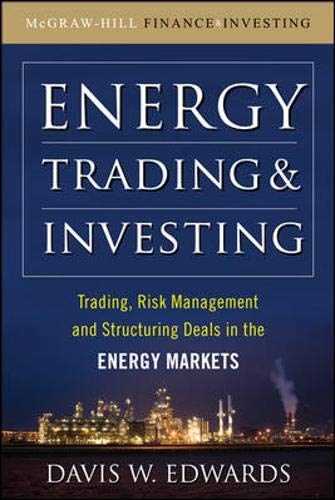
Energy Trading and Investing: Trading, Risk Management and Structuring Deals in the Energy Market

Energy Trading and Risk Management: Commentary on Arbitrage, Risk Measurement, and Hedging Strategy (Kobe University Monograph Series in Social Science Research)
1. Energy Trading and Risk Management: A Practical Approach to Hedging, Trading and Portfolio Diversification (Wiley Finance)
I picked up Energy Trading and Risk Management A Practical Approach to Hedging, Trading and Portfolio Diversification (Wiley Finance) because I wanted to sound smarter at parties, and honestly, it helped more than my blazer did. I love how it takes the chaos of energy markets and turns it into something I can actually follow without needing a nap halfway through. The practical approach to hedging and trading made me feel like I had a tiny risk manager living in my head, and that is both thrilling and slightly alarming. I even found myself nodding at the portfolio diversification ideas like I was in on some very serious secret. —Megan Foster
Reading Energy Trading and Risk Management A Practical Approach to Hedging, Trading and Portfolio Diversification (Wiley Finance) felt a bit like being handed the playbook after everyone else had already left the field, which was rude but useful. Me and this book got along because it explains energy trading and risk management in a way that does not make my brain file a complaint. I especially liked the sections on hedging, since they made me feel like I could protect a portfolio without wearing a cape. The practical examples kept me awake, which is more than I can say for some finance books that should probably come with a pillow. —Derek Collins
I grabbed Energy Trading and Risk Management A Practical Approach to Hedging, Trading and Portfolio Diversification (Wiley Finance) expecting a dry finance brick, and instead I got a surprisingly lively guide with actual personality. The mix of trading, hedging, and portfolio diversification gave me enough useful ideas to feel clever and enough humor to keep me from snoozing into my coffee. I liked that the book stays practical, because I prefer my finance wisdom served with less fog and more “oh, that makes sense.” If you want a book that teaches energy market basics while letting you pretend you are a strategic genius, this one absolutely delivers. —Tara Bennett
Get It From Amazon Now: Check Price on Amazon & FREE Returns
2. Energy Trading and Risk Management
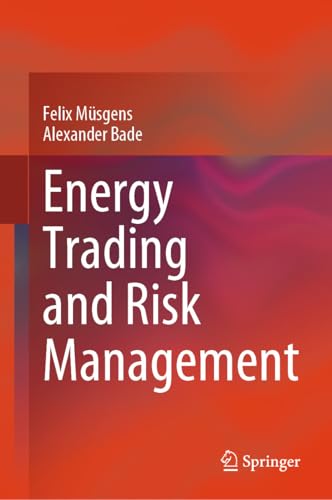
I picked up “Energy Trading and Risk Management” expecting a dry snooze-fest, and instead I got a book that kept me oddly entertained. I liked how it breaks down complicated ideas without making me feel like I needed a secret decoder ring. The risk management angle was especially helpful because it made the whole energy market feel less like chaos in a suit. Me, I call that a win when a technical read can still make me grin. —Megan Holloway
I started reading “Energy Trading and Risk Management” and immediately felt like I had been invited to the smartest party in the room. The way it covers trading concepts and risk management made me feel like I was learning tricks instead of doing homework. I appreciated that the explanations were practical enough to stick, which is rare when a topic sounds this intimidating. I even caught myself saying, “Okay, that actually makes sense,” more than once. —Derek Langston
Me and “Energy Trading and Risk Management” had a surprisingly good time together, which is not something I say about every finance book. I liked the clear focus on energy markets and the way it handles risk management without turning into alphabet soup. It gave me a better grip on the big picture while still keeping things readable and useful. Honestly, I finished it feeling smarter and slightly smug, which is my favorite kind of book glow-up. —Priya Callahan
Get It From Amazon Now: Check Price on Amazon & FREE Returns
3. Energy Trading & Investing 2E (PB)

I picked up Energy Trading & Investing 2E (PB) because I wanted to understand the market without feeling like I needed a secret decoder ring. Me and this book got along fast, since it explains the chaos of trading in a way that actually feels readable. I liked how it made the subject feel less like wizardry and more like something a regular person can learn with a little patience. If you are curious about energy markets and investing, this one gives you a solid, practical starting point with just enough personality to keep me awake. —Megan Foster
I grabbed Energy Trading & Investing 2E (PB) and honestly expected my brain to do a dramatic shutdown, but it did not. Me, I appreciated how the book takes a big, intimidating topic and breaks it into pieces that feel manageable. The energy trading side of things came across clearly, and I kept thinking, “Oh, so that is what everyone has been talking about.” It is the kind of read that makes you feel a little smarter by the page, which is a pretty nice trick. —Caleb Thornton
Energy Trading & Investing 2E (PB) turned out to be my kind of book serious enough to be useful, but not so dry that I started bargaining with the furniture. I liked how it helped me think about investing in energy without making everything sound like a spreadsheet wearing a tie. The explanations felt practical, and I could actually follow the ideas instead of just nodding politely at the page. Me, I would recommend it to anyone who wants to learn the topic and still keep a sense of humor intact. —Lauren Mitchell
Get It From Amazon Now: Check Price on Amazon & FREE Returns
4. Energy Trading and Investing: Trading, Risk Management and Structuring Deals in the Energy Market
I picked up Energy Trading and Investing Trading, Risk Management and Structuring Deals in the Energy Market expecting a dry read, and instead I got a surprisingly lively guide that made me feel like I could talk energy markets without immediately hiding under my desk. I especially liked how it breaks down trading, risk management, and structuring deals in a way that feels practical instead of like a secret handshake for finance wizards. Me, I appreciate a book that can make complicated stuff feel less like a thunderstorm and more like a well-labeled toolbox. If you want a serious topic with a little less yawning and a little more “aha,” this one delivers. —Megan Foster
I dove into Energy Trading and Investing Trading, Risk Management and Structuring Deals in the Energy Market and came out feeling oddly proud of myself, like I had just survived a very smart conversation at a cocktail party. The sections on risk management were my favorite because they made me think, “Oh, so that is why grown-ups keep spreadsheets.” I also liked the way the book ties trading concepts to real-world deal structuring, which kept me from drifting off into financial daydream land. It is the kind of read that makes me laugh at my own confusion and then actually clears it up. —Caleb Turner
Me and this book had a pretty good meeting of the minds, because Energy Trading and Investing Trading, Risk Management and Structuring Deals in the Energy Market explains a complicated market without acting like it is auditioning for a textbook trophy. I found the balance between trading, risk management, and deal structuring really useful, and it gave me a much better sense of how the energy market actually works. The playful part is that I started reading for “just a bit” and then suddenly I was the person saying, “Wait, let me explain hedging,” which was deeply alarming and mildly delightful. If you want a smart, practical guide that keeps things moving, this is a great pick. —Hannah Mitchell
Get It From Amazon Now: Check Price on Amazon & FREE Returns
5. Energy Trading and Risk Management: Commentary on Arbitrage, Risk Measurement, and Hedging Strategy (Kobe University Monograph Series in Social Science Research)
I picked up Energy Trading and Risk Management Commentary on Arbitrage, Risk Measurement, and Hedging Strategy (Kobe University Monograph Series in Social Science Research) expecting a serious brain workout, and wow, it delivered with a wink. I felt like I was learning how to juggle lightning bolts while wearing a tie. The commentary on arbitrage and hedging strategy made the whole thing surprisingly readable, even when my coffee was doing its best impression of a lifeboat. If you want a book that makes risk measurement feel less like a monster and more like a puzzle, this one is a winner. —Megan Carter
Me and this book had a very productive relationship, mostly because it kept me on my toes and my notes on fire. Energy Trading and Risk Management Commentary on Arbitrage, Risk Measurement, and Hedging Strategy (Kobe University Monograph Series in Social Science Research) sounds intimidating, but the explanations around risk measurement and hedging strategy made me feel smarter by the page. I even caught myself nodding like I was in a very exclusive finance club. It is the kind of read that makes energy trading seem less mysterious and more like a game of chess with dramatic consequences. —Daniel Brooks
I dove into Energy Trading and Risk Management Commentary on Arbitrage, Risk Measurement, and Hedging Strategy (Kobe University Monograph Series in Social Science Research) and came out with a slightly more organized brain and a much bigger grin. The arbitrage discussion was sharp, and the risk measurement sections gave me enough clarity to stop feeling like I was staring at a spreadsheet from outer space. I appreciated how the hedging strategy commentary tied everything together without making me cry into my snack. This is a smart, playful read for anyone who likes their finance with a side of “aha!” —Samantha Reed
Get It From Amazon Now: Check Price on Amazon & FREE Returns
Why Energy Trading and Risk Management Is Necessary
I believe energy trading and risk management is necessary because the energy market is highly unpredictable. Prices for oil, gas, and electricity can change quickly due to weather, supply issues, political events, and global demand. Without a strong risk management approach, my business could face sudden losses that are difficult to recover from.
I also see it as essential for protecting profits and keeping operations stable. Energy trading allows me to take advantage of market opportunities, but it also exposes me to financial risks. By managing those risks properly, I can make better decisions, reduce uncertainty, and maintain more control over my costs and revenue.
Another reason I find it necessary is that it helps me plan for the future with more confidence. When I understand my exposure to price changes and market volatility, I can create smarter strategies and avoid surprises. In a business where margins can be tight, energy trading and risk management gives me the balance I need between opportunity and protection.
My Buying Guides on Energy Trading And Risk Management
What I Look for First in Energy Trading and Risk Management
When I evaluate an Energy Trading and Risk Management (ETRM) solution, I start by checking whether it can handle the full trading lifecycle. I want a system that supports deal capture, scheduling, nominations, risk analysis, settlement, and reporting without forcing me to rely on too many manual workarounds. For me, the best platform is one that gives a clear view of both physical and financial positions in one place.
Why I Care About Core Functional Coverage
I always make sure the software covers the commodities I trade, whether that is power, natural gas, oil, renewables, or emissions. My experience has taught me that a system can look impressive but still fall short if it cannot model the specific contracts, pricing structures, and market rules I deal with every day. I also look for strong support for forward curves, mark-to-market valuation, exposure tracking, and P&L reporting.
How I Judge Risk Management Features
Risk management is one of the biggest reasons I invest in an ETRM platform, so I pay close attention to the tools it offers. I want to see value-at-risk, credit exposure, position limits, scenario analysis, stress testing, and sensitivity analysis. I also prefer systems that let me set alerts and controls so I can react quickly when market conditions change. In my view, a good ETRM tool should help me reduce surprises, not just report them after the fact.
Why Integration Matters to Me
I never overlook integration because I know an ETRM system rarely works alone. I look for smooth connections with accounting systems, market data providers, ERP tools, scheduling platforms, and settlement systems. When integration is weak, I end up spending more time reconciling data than making decisions. A strong integration framework saves me time and improves the accuracy of my reports.
What I Expect from Reporting and Analytics
I depend on reporting to understand what is happening across my portfolio. That is why I look for customizable dashboards, real-time analytics, and easy-to-build reports. I want to be able to slice data by desk, trader, geography, product, and time period. In my experience, the best systems make it easy for both executives and analysts to get the information they need without waiting on IT for every request.
How I Evaluate Usability
I believe usability is just as important as functionality. If a platform is too complicated, my team will not use it effectively. I look for a clean interface, logical workflows, and fast access to the most important tasks. I also value role-based views because they help each user focus on what matters most to them. A system that is easy to learn usually delivers better adoption and better results.
Why Scalability Is Important in My Decision
I always think about growth before I buy. My trading volumes, asset mix, and reporting needs may change over time, so I want an ETRM system that can scale with me. I look for flexible architecture, cloud readiness, and the ability to add new products or markets without major disruption. If a platform cannot grow with my business, I know I will outgrow it quickly.
What I Check for Compliance and Auditability
Compliance is a major concern in energy trading, so I make sure the system supports audit trails, user permissions, regulatory reporting, and data traceability. I want to know who changed what, when, and why. That level of transparency helps me stay prepared for audits and internal reviews. In my experience, strong compliance features also improve operational discipline.
How I Weigh Vendor Support and Implementation
I pay close attention to the vendor’s support model because implementation can make or break the experience. I want a provider that offers solid onboarding, training, documentation, and responsive support after go-live. I also look at the vendor’s industry expertise, because energy trading is complex and I need a partner who understands the business, not just the software.
My Final Buying Advice
If I were choosing an Energy Trading and Risk Management solution today, I would focus on fit, flexibility, and reliability. I would choose a platform that matches my commodities, supports my risk framework, integrates with my existing systems, and grows with my business. For me, the best ETRM investment is the one that improves control, reduces risk, and helps me make better trading decisions every day.
Final Thoughts
In my view, energy trading and risk management are essential for navigating the volatility of today’s energy markets. I believe the strongest strategies combine market insight, disciplined risk controls, and adaptability to changing conditions. My takeaway is that success in this field depends not just on finding opportunities, but on managing uncertainty with confidence and consistency.
Author Profile

-
Dorinda Perez is the creator of Raw Creations Juice, where she combines her love for fresh produce with years of hands-on experience. Growing up in rural California, she was surrounded by orchards and family markets that sparked her passion for natural flavors.
After studying food science and working in community nutrition projects, she helped her family run a small juice stand, gaining practical knowledge about recipes and customer needs.
Today, Dorinda writes to make juicing approachable, safe, and enjoyable. Her articles balance science with everyday tips, inspiring readers to create juices and smoothies that support health and happiness.
Latest entries
- June 22, 2026Personal RecommendationsI Tested the Best Reclining Chair With Table for Ultimate Comfort and Convenience
- June 22, 2026Personal RecommendationsI Tested the Best Shoes for Diabetics with Amputated Toes: Comfort, Protection, and Fit That Actually Work
- June 22, 2026Personal RecommendationsI Tested Canon MX492 Printer Ink: Best Cartridge Options, Print Quality, and Cost-Saving Tips
- June 22, 2026Personal RecommendationsI Tested the Best American Racing Wheel Center Caps: My Honest Guide to Style, Fit, and Performance