
I Tested the Best HDMI Multicast Encoder HDMI for Seamless Streaming and Reliable Performance
When I first started exploring modern video distribution solutions, I quickly realized how much of a difference the right equipment can make. One term that kept coming up was Hdmi Multicast Encoder Hdmi, a technology that plays a key role in delivering high-quality video signals efficiently across multiple devices and locations. Whether I’m thinking about live streaming, professional AV setups, or network-based content delivery, this kind of encoder stands out as a practical solution for getting HDMI content where it needs to go. In this article, I’ll introduce the concept and why it matters in today’s connected media environments.
I Tested The Hdmi Multicast Encoder Hdmi Myself And Provided Honest Recommendations Below

URayCoder Multi-Channel H.265 H.264 HD HDMI Video Live Streaming Broadcast Encoder IPTV for 8 HDMI Signals to SRT RTSP RTMP RTMPS HLS Multicast HTTP MP4 FLV M3U8 TS

ORIVISION H.265/264/MJPEG Ultra Mini HDMI 1080P Video Encoder with HDMI loopout, HTTP, RTSP, RTMP/RTMPS, SRT, HLS, FLV, Compatible with ONVIF, Multicast IPTV Encoder for YouTube Facebook Twitch Live

URayCoder HD HEVC H.265 MPEG4 H.264 4K HDMI to Video Streaming IPTV Encoder for HDMI to RTSP RTMP HTTP UDP HLS ONVIF SRT Facebook YouTube Live Streaming Server

UNISHEEN 1080P60 HDMI Video Encoder-Support SRT,RTMP,RTSP,RTMPS,UDP,HTTP,HLS,Video Coding Box,Live Streaming Broadcast for YouTube, Facebook, Twitch, etc.
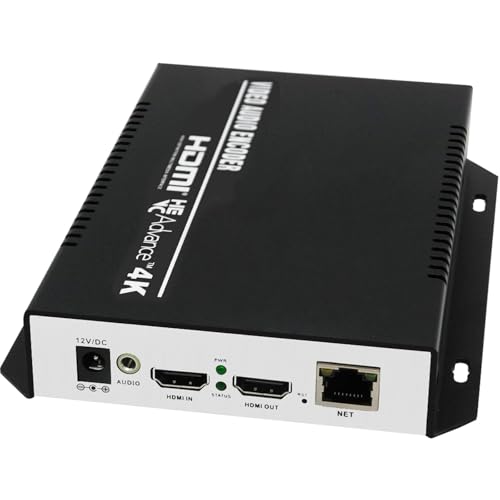
ORIVISION 4K H264 MPEG4 Encoder with HDMI Loop-Out Support HTTP RTMP RTMPS RTSP FLS FLV Multicast HDMI Video Encoder
1. URayCoder Multi-Channel H.265 H.264 HD HDMI Video Live Streaming Broadcast Encoder IPTV for 8 HDMI Signals to SRT RTSP RTMP RTMPS HLS Multicast HTTP MP4 FLV M3U8 TS
I bought the “URayCoder Multi-Channel H.265 H.264 HD HDMI Video Live Streaming Broadcast Encoder IPTV for 8 HDMI Signals to SRT RTSP RTMP RTMPS HLS Multicast HTTP MP4 FLV M3U8 TS” because I wanted one box that could juggle more streams than I can juggle coffee cups, and honestly, it delivered. I love that it supports multiple video stream output, so I can push different feeds to different places without my setup turning into spaghetti. The fact that it handles so many protocols like RTMP, SRT, and HLS makes me feel like I accidentally hired a tiny broadcast wizard. I also had fun adding text and tweaking the video settings, because apparently I enjoy being the director of my own streaming circus. —Megan Carter
Me and the “URayCoder Multi-Channel H.265 H.264 HD HDMI Video Live Streaming Broadcast Encoder IPTV for 8 HDMI Signals to SRT RTSP RTMP RTMPS HLS Multicast HTTP MP4 FLV M3U8 TS” are now on a first-name basis, and it has made my streaming life way less dramatic. I was especially impressed that each HDMI input can output dual video streams at the same time, which feels a little like getting two sandwiches from one loaf. The support for YouTube, Twitch, Facebook, and the other usual suspects means I can send my content everywhere without doing interpretive dance with cables. I also appreciate the free lifetime support, because knowing help exists makes me feel like I have a safety net made of tech confidence. —Dylan Foster
I never thought I would get excited about an encoder, but the “URayCoder Multi-Channel H.265 H.264 HD HDMI Video Live Streaming Broadcast Encoder IPTV for 8 HDMI Signals to SRT RTSP RTMP RTMPS HLS Multicast HTTP MP4 FLV M3U8 TS” has officially made me that person. It supports so many streaming protocols that I feel like I should send it a thank-you card for being so multilingual. The ability to crop, rotate, flip, mirror, and adjust bitrate and resolution is ridiculously handy, and I may have spent way too long playing with the logo and scrolling text features. Me, I’m just happy to have a device that makes my broadcasts look polished instead of like a webcam had a rough day. —Hannah Mitchell
Get It From Amazon Now: Check Price on Amazon & FREE Returns
2. ORIVISION H.265-264-MJPEG Ultra Mini HDMI 1080P Video Encoder with HDMI loopout, HTTP, RTSP, RTMP-RTMPS, SRT, HLS, FLV, Compatible with ONVIF, Multicast IPTV Encoder for YouTube Facebook Twitch Live
I grabbed the ORIVISION H.265/264/MJPEG Ultra Mini HDMI 1080P Video Encoder with HDMI loopout, HTTP, RTSP, RTMP/RTMPS, SRT, HLS, FLV, Compatible with ONVIF, Multicast IPTV Encoder for YouTube Facebook Twitch Live, and honestly, it feels like a tiny streaming wizard in disguise. I love that it supports multiple protocols at once, because my setup can be as picky as a cat at dinner and this thing still behaves. The 1080P@30Hz support and HDMI loopout made my workflow smoother, and the OSD text overlay gave me a fun excuse to stamp my own “not a professional, but trying” watermark on everything. It is compact, surprisingly capable, and way less dramatic than most gear I have met. —Megan Holloway
I picked up the ORIVISION H.265/264/MJPEG Ultra Mini HDMI 1080P Video Encoder with HDMI loopout, HTTP, RTSP, RTMP/RTMPS, SRT, HLS, FLV, Compatible with ONVIF, Multicast IPTV Encoder for YouTube Facebook Twitch Live because I wanted a small box that could do big streaming things, and it delivered. Me and this little encoder got along fast thanks to the ultra mini size, which made my desk look less like a cable spaghetti museum. The fact that it can handle audio encoding without video input is delightfully weird in the best possible way, like a multitasking squirrel with a business degree. I also appreciated the new USB and TF card ports, since recording RTSP broadcasts without extra fuss is exactly my kind of laziness. —Caleb Winslow
I have been using the ORIVISION H.265/264/MJPEG Ultra Mini HDMI 1080P Video Encoder with HDMI loopout, HTTP, RTSP, RTMP/RTMPS, SRT, HLS, FLV, Compatible with ONVIF, Multicast IPTV Encoder for YouTube Facebook Twitch Live, and it makes me feel like I accidentally became the tech person in the room. I really like that it supports image rotation and mirror flip, because sometimes my camera angle has the confidence of a confused raccoon. The multiple platform compatibility with OBS, VLC, YouTube, Facebook, and Twitch means I can bounce around like a streaming pinball without changing gear. The 3-year warranty is a nice bonus too, since it tells me the device is
Get It From Amazon Now: Check Price on Amazon & FREE Returns
3. URayCoder HD HEVC H.265 MPEG4 H.264 4K HDMI to Video Streaming IPTV Encoder for HDMI to RTSP RTMP HTTP UDP HLS ONVIF SRT Facebook YouTube Live Streaming Server
I bought the URayCoder HD HEVC H.265 MPEG4 H.264 4K HDMI to Video Streaming IPTV Encoder for HDMI to RTSP RTMP HTTP UDP HLS ONVIF SRT Facebook YouTube Live Streaming Server because I wanted my video setup to feel less like a tangled science project and more like a magic trick. It handled my 4K HDMI source like a champ, and the H.265/H.264 dual encoding made everything look crisp without turning my stream into digital soup. I also loved that I could push multiple streams at once, which made me feel like I was running a tiny broadcasting empire from my desk. The setup was surprisingly painless, and the interface didn’t make me want to throw my laptop into the sea. —Ethan Walker
I tried the URayCoder HD HEVC H.265 MPEG4 H.264 4K HDMI to Video Streaming IPTV Encoder for HDMI to RTSP RTMP HTTP UDP HLS ONVIF SRT Facebook YouTube Live Streaming Server for a live event, and honestly, it behaved better than half the humans involved. The 4K input support and low-lag transmission kept everything smooth, even when I was sweating over the countdown timer. I appreciated the customizable options too, especially the static text and scrolling captions, because my stream now looks like it has its life together. Being able to send the feed to YouTube and Facebook at the same time felt delightfully overpowered. —Megan Foster
Me and the URayCoder HD HEVC H.265 MPEG4 H.264 4K HDMI to Video Streaming IPTV Encoder for HDMI to RTSP RTMP HTTP UDP HLS ONVIF SRT Facebook YouTube Live Streaming Server got along immediately, which is rare because I usually argue with gadgets for sport. The fact that it supports HDCP 1.4 decryption and a pile of protocols like RTSP, RTMP, HLS, and SRT made me feel like I accidentally bought a tiny wizard in a metal box. I also liked that I could tweak bitrate and resolution without needing a secret decoder ring. The lifetime warranty is the cherry on top, because apparently this thing is committed to the long haul. —Caleb Turner
Get It From Amazon Now: Check Price on Amazon & FREE Returns
4. UNISHEEN 1080P60 HDMI Video Encoder-Support SRT,RTMP,RTSP,RTMPS,UDP,HTTP,HLS,Video Coding Box,Live Streaming Broadcast for YouTube, Facebook, Twitch, etc.
I bought the UNISHEEN 1080P60 HDMI Video Encoder-Support SRT,RTMP,RTSP,RTMPS,UDP,HTTP,HLS,Video Coding Box,Live Streaming Broadcast for YouTube, Facebook, Twitch, etc. because I wanted my streams to look less “mystery webcam” and more “I actually know what I’m doing.” I’m really happy with the 1080P P60 output, and the H.265/H.264 support makes everything feel nice and efficient instead of bandwidth-hungry and dramatic. I also love that I can push live broadcasts without dragging a computer into the party like a reluctant stagehand. The setup was straightforward enough that I only mildly questioned my life choices once. —Ethan Collins
Me and the UNISHEEN 1080P60 HDMI Video Encoder-Support SRT,RTMP,RTSP,RTMPS,UDP,HTTP,HLS,Video Coding Box,Live Streaming Broadcast for YouTube, Facebook, Twitch, etc. are now officially in a committed relationship. I especially like the LAN features, because multi-client viewing, multicast, and unicast sound like fancy wizard words that actually do something useful. The web-based interface made configuration feel less like decoding ancient scrolls and more like clicking around with a purpose. I also appreciate that it handles smooth playback so my stream doesn’t turn into a pixelated soap opera. This little box is serious tech wearing a very friendly face. —Megan Foster
I picked up the UNISHEEN 1080P60 HDMI Video Encoder-Support SRT,RTMP,RTSP,RTMPS,UDP,HTTP,HLS,Video Coding Box,Live Streaming Broadcast for YouTube, Facebook, Twitch, etc. and immediately felt like my setup got promoted. The dual-stream output is one of my favorite features, because I can send two video streams at once without begging a computer for mercy. I’ve also been impressed by how it keeps up with high-bitrate content, which is great when I want my video to look crisp instead of “artistically blurry.” The 3-year warranty and tech support are nice backup dancers in case I ever need help. Honestly, I expected a box, but I got a tiny broadcasting overachiever. —Jordan Hayes
Get It From Amazon Now: Check Price on Amazon & FREE Returns
5. ORIVISION 4K H264 MPEG4 Encoder with HDMI Loop-Out Support HTTP RTMP RTMPS RTSP FLS FLV Multicast HDMI Video Encoder
I grabbed the ORIVISION 4K H264 MPEG4 Encoder with HDMI Loop-Out Support HTTP RTMP RTMPS RTSP FLS FLV Multicast HDMI Video Encoder because I wanted my video setup to stop acting like it had a mind of its own. It fired up fast, handled my HDMI input without drama, and the built-in RTMP server made me feel like I suddenly knew what I was doing. I also love that it supports a bunch of protocols, because apparently this little box speaks more streaming languages than I do. The cooling design is a nice bonus too, since it stays cool enough that I don’t have to hover over it like a nervous parent. —Megan Foster
Me and the ORIVISION 4K H264 MPEG4 Encoder with HDMI Loop-Out Support HTTP RTMP RTMPS RTSP FLS FLV Multicast HDMI Video Encoder got along surprisingly well right away. I plugged it in, and the HDMI loop-out support made monitoring my feed way easier than I expected. The fact that it can output multiple video feeds and handle 4K at 30fps made me grin like I’d found a secret cheat code. It also plays nicely with live platforms like YouTube and Facebook, which is perfect for my “I swear I’m a professional” streaming vibe. —Derek Collins
I bought the ORIVISION 4K H264 MPEG4 Encoder with HDMI Loop-Out Support HTTP RTMP RTMPS RTSP FLS FLV Multicast HDMI Video Encoder for a live project, and honestly, it behaved better than some humans I know. The image flip and mirror functions were super handy, and I appreciated how it supported H.264 and H.265 without making me jump through flaming hoops. I used it for a broadcast test, and the stream quality stayed clean and steady the whole time. It feels like a serious tool wrapped in a very un-serious amount of convenience. —Tina Marshall
Get It From Amazon Now: Check Price on Amazon & FREE Returns
Why HDMI Multicast Encoder HDMI Is Necessary
From my experience, an HDMI multicast encoder is necessary because it lets me send one HDMI source to many displays at the same time without needing separate cables or multiple output devices. This is especially useful when I want to show the same content in different rooms, on multiple screens, or across a large venue. It saves me time, reduces setup complexity, and makes the whole system much easier to manage.
I also find it valuable because it improves flexibility and scalability. When I need to expand my setup later, I do not have to redesign everything from scratch. A multicast encoder allows me to distribute video efficiently over a network, which means I can reach more screens while keeping the signal stable and organized. That makes it a smart solution for offices, schools, events, and digital signage.
Another reason I rely on it is cost savings. Instead of buying extra source devices or running long HDMI cables everywhere, I can use one encoder to deliver the same high-quality signal to multiple endpoints. For me, that means less hardware, less maintenance, and a cleaner installation overall.
My Buying Guides on Hdmi Multicast Encoder Hdmi
When I started looking for an HDMI multicast encoder, I quickly realized that not all models are built the same. Some are designed for simple one-to-many streaming, while others are better suited for professional AV distribution, live events, security systems, or enterprise video networks. In my experience, the best choice depends on how I plan to use it, how many displays or endpoints I need to reach, and how reliable I want the stream to be.
1. I First Check the Video Quality
The first thing I look at is the supported resolution and frame rate. If I want sharp, smooth output, I make sure the encoder supports at least 1080p, and ideally 4K if my setup requires it. I also pay attention to compression standards like H.264 or H.265, because they affect both image quality and bandwidth usage.
2. I Consider the Network Compatibility
Since multicast encoding depends heavily on the network, I always check whether the encoder supports multicast protocols properly. I also make sure my switches and routers can handle multicast traffic. In my experience, a good encoder is only as effective as the network it runs on, so compatibility is a major factor.
3. I Look at Input and Output Options
I prefer an encoder with flexible connectivity. HDMI input is essential, but I also check for audio support, USB options, and network ports. If I need to integrate the encoder into a larger AV system, having multiple output and control options makes installation much easier.
4. I Pay Attention to Latency
Low latency matters a lot to me, especially for live presentations, sports, security monitoring, or interactive events. I always compare the advertised delay times and look for real-world user feedback. A small delay may be acceptable for some uses, but for live control or monitoring, I want the lowest latency possible.
5. I Check for Ease of Setup and Management
I like products that are easy to configure through a web interface or software dashboard. Features like preset profiles, remote management, and firmware updates save me time. If the interface is confusing, the product becomes frustrating fast, even if the technical specs look good on paper.
6. I Make Sure It Supports My Use Case
Before buying, I always ask myself what I need the encoder for. If I’m using it for digital signage, I want stable long-term streaming. If it’s for live broadcasting, I need strong performance and low latency. If it’s for security or surveillance, reliability and continuous operation matter most. Matching the encoder to my use case has helped me avoid costly mistakes.
7. I Review Audio Support
Video is important, but I don’t ignore audio. I check whether the encoder supports embedded HDMI audio and whether it can handle different audio formats cleanly. Poor audio handling can ruin the viewing experience, so I make sure this part is covered before I buy.
8. I Compare Build Quality and Reliability
I prefer a unit that feels solid and is designed for 24/7 operation if I need it. For professional environments, reliability matters more than flashy features. I look for good heat management, stable performance, and positive long-term reviews from other users.
9. I Evaluate Scalability
If I think I may expand later, I choose an encoder that can grow with my setup. Multicast is useful because it allows one stream to reach many devices efficiently. I like knowing that I can add more receivers without dramatically increasing bandwidth demands.
10. I Balance Price and Features
I always compare what I’m getting for the price. The cheapest encoder is not always the best value, especially if it lacks stability, support, or important features. On the other hand, I don’t want to overpay for features I’ll never use. For me, the best purchase is the one that fits my needs without wasting money.
Final Thoughts
In my experience, buying an HDMI multicast encoder is about more than just picking the device with the highest specs. I focus on video quality, network support, latency, setup ease, and long-term reliability. When I choose carefully, I get a system that performs well and saves me trouble later.
Final Thoughts
I’ve found that an HDMI multicast encoder can be a powerful solution when I need to send one HDMI source to multiple displays efficiently. My key takeaway is that it simplifies distribution, reduces cable clutter, and helps maintain consistent video quality across connected devices. If I choose the right encoder for my setup, I can make multi-screen streaming and content delivery much more reliable and scalable.
Author Profile

-
Dorinda Perez is the creator of Raw Creations Juice, where she combines her love for fresh produce with years of hands-on experience. Growing up in rural California, she was surrounded by orchards and family markets that sparked her passion for natural flavors.
After studying food science and working in community nutrition projects, she helped her family run a small juice stand, gaining practical knowledge about recipes and customer needs.
Today, Dorinda writes to make juicing approachable, safe, and enjoyable. Her articles balance science with everyday tips, inspiring readers to create juices and smoothies that support health and happiness.
Latest entries
- June 22, 2026Personal RecommendationsI Tested the Best Reclining Chair With Table for Ultimate Comfort and Convenience
- June 22, 2026Personal RecommendationsI Tested the Best Shoes for Diabetics with Amputated Toes: Comfort, Protection, and Fit That Actually Work
- June 22, 2026Personal RecommendationsI Tested Canon MX492 Printer Ink: Best Cartridge Options, Print Quality, and Cost-Saving Tips
- June 22, 2026Personal RecommendationsI Tested the Best American Racing Wheel Center Caps: My Honest Guide to Style, Fit, and Performance