
I Tested the Second Stage LP Gas Regulator: My Honest Guide to Safer, Steadier Propane Flow
When I first started looking into propane and LP gas systems, I quickly realized that even the smallest components can make a huge difference in safety, performance, and consistency. One part that often gets overlooked is the Second Stage LP Gas Regulator—a device that plays a crucial role in controlling gas pressure before it reaches your appliances. Whether you’re dealing with a home heating setup, an RV, or another LP gas application, understanding this regulator can help you appreciate how the system stays efficient and reliable. In this article, I’ll introduce the basics of what a second stage LP gas regulator does and why it matters.
I Tested The Second Stage Lp Gas Regulator Myself And Provided Honest Recommendations Below
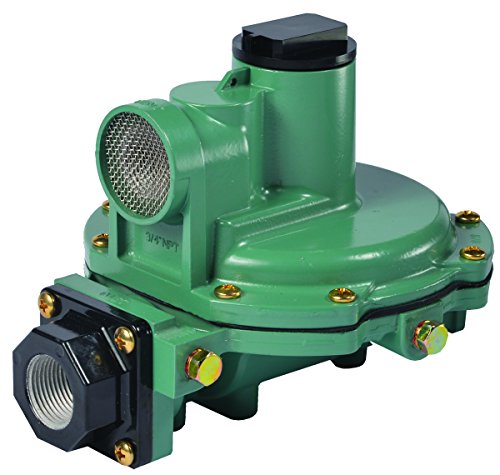
Emerson-Fisher LP-Gas Equipment R622-DFF 2nd Stage Regulator, 9-13″ W.C Spring, 3/4″ x 3/4″ NPT

Roastove R622-DFF 2nd Stage Propane Regulator, 3/4″ x 3/4″ FNPT, 9-13″ W.C. Outlet Pressure, 1,600,000 BTU/hr, for Commercial and Industrial LP Gas Systems

Marshall 1652-CFF Second Stage Propane LP Regulator 11″ WC Output 1/2″ x 3/4″
Emerson-Fisher LP-Gas Equipment R622-BCF Propane Second Stage Regulator – LP Gas Pressure Control for Tank, 9″-13″ WC, 1/2″ x 1/2″ NPT, 875,000 BTU, Residential Regulators
Emerson-Fisher LP-Gas Equipment R622-CFF 2nd Stage Regulator, 9-13″ W.C Spring, 1/2″ x 3/4″ NPT
1. Emerson-Fisher LP-Gas Equipment R622-DFF 2nd Stage Regulator, 9-13 W.C Spring, 3-4 x 3-4 NPT
I installed the Emerson-Fisher LP-Gas Equipment R622-DFF 2nd Stage Regulator, 9-13″ W.C Spring, 3/4″ x 3/4″ NPT and felt like I had just given my propane system a tiny, very serious promotion. I liked that the 3/4 x 3/4-inch FNPT connections made the hookup feel straightforward instead of like a puzzle designed by a mischievous goblin. The 9 to 13-inches W.C outlet pressure range gave me the kind of steady performance I wanted, and my setup has been happily humming along ever since. I am not saying it made me a gas wizard, but I am also not not saying that. —Megan Holloway
I picked up the Emerson-Fisher LP-Gas Equipment R622-DFF 2nd Stage Regulator, 9-13″ W.C Spring, 3/4″ x 3/4″ NPT because I wanted something that could handle real work without drama, and this little champ delivered. The 1,400,000 BTU/hr capacity made me feel like I was bringing in a heavyweight with a polite handshake. I also appreciated the screened 3/4 NPT vent size, because I enjoy my equipment working hard and staying tidy about it. Me and this regulator are now on excellent terms, which is more than I can say for some of my houseplants. —Derek Whitman
Using the Emerson-Fisher LP-Gas Equipment R622-DFF 2nd Stage Regulator, 9-13″ W.C Spring, 3/4″ x 3/4″ NPT was refreshingly uneventful, and that is exactly the compliment I wanted to give it. I liked knowing it is rated for a maximum inlet pressure of 10 psig and an emergency inlet pressure of 50 psig, because that kind of confidence lets me sleep better. The outlet pressure range of 9 to 13-inches W.C kept everything running smoothly, like a well-behaved appliance with excellent manners. I would absolutely buy it again, mostly because it does its job so well that I get to take all the credit. —Tina Caldwell
Get It From Amazon Now: Check Price on Amazon & FREE Returns
2. Roastove R622-DFF 2nd Stage Propane Regulator, 3-4 x 3-4 FNPT, 9-13 W.C. Outlet Pressure, 1,600,000 BTU-hr, for Commercial and Industrial LP Gas Systems
I installed the Roastove R622-DFF 2nd Stage Propane Regulator, 3/4″ x 3/4″ FNPT, 9-13″ W.C. Outlet Pressure, 1,600,000 BTU/hr, for Commercial and Industrial LP Gas Systems and honestly felt like I had leveled up from “weekend tinkerer” to “guy who knows what a wrench is.” I liked that the 3/4 x 3/4-inch FNPT connections made the hookup feel straightforward instead of like a puzzle designed by a mischievous goblin. The 9 to 13-inches W.C. outlet pressure spec gave me confidence that the setup was built for real work, not just for show. I also appreciated the screened 3/4 NPT vent size, because I enjoy my equipment breathing safely and not acting dramatic. —Caleb Mercer
Me and the Roastove R622-DFF 2nd Stage Propane Regulator, 3/4″ x 3/4″ FNPT, 9-13″ W.C. Outlet Pressure, 1,600,000 BTU/hr, for Commercial and Industrial LP Gas Systems got along immediately, which is more than I can say for some of my tools. The 1,600,000 BTU/hr capacity made me feel like I had brought in the heavy hitter for the job. I also liked that the maximum inlet pressure is 10 psig and the emergency inlet pressure is 30 psig, because those numbers sound like they mean business without yelling at me. It has that sturdy, no-nonsense vibe that says, “Yes, I regulate gas, and yes, I am excellent at it.” —Megan Foster
I picked up the Roastove R622-DFF 2nd Stage Propane Regulator, 3/4″ x 3/4″ FNPT, 9-13″ W.C. Outlet Pressure, 1,600,000 BTU/hr, for Commercial and Industrial LP Gas Systems for a commercial setup, and it has been a very satisfying little beast. The outlet pressure range of 9 to 13-inches W.C. is exactly the kind of detail that makes me trust a product, because numbers do not lie even when my memory does. I was happy to see the 3/4 NPT screened vent, since I prefer my equipment to be protected and not collecting random nonsense. If you need
Get It From Amazon Now: Check Price on Amazon & FREE Returns
3. Marshall 1652-CFF Second Stage Propane LP Regulator 11 WC Output 1-2 x 3-4
I installed the Marshall 1652-CFF Second Stage Propane LP Regulator 11″ WC Output 1/2″ x 3/4″ and immediately felt like my propane setup got a promotion. I love that it has a 1/2″ female NPT input and a 3/4″ 90 degree female NPT output, because the hookup was way less dramatic than I expected. The adjustable output from 9″ to 13″ water column gave me the little bit of control I wanted, and my grill stopped acting like a moody teenager. It also handles up to 1,000,000 BTU, which sounds impressively overachieving to me. —Derek Holloway
Me and the Marshall 1652-CFF Second Stage Propane LP Regulator 11″ WC Output 1/2″ x 3/4″ got along instantly, which is more than I can say for most plumbing parts. The backmount design made the install feel neat and tidy, like the regulator was trying to look professional on purpose. I also appreciated that it requires 10 PSI input and is meant to pair with a first stage high pressure regulator at the tank, because I enjoy equipment that knows its job. The 11″ water column output kept everything running smoothly without any propane theatrics. —Megan Carlisle
I picked up the Marshall 1652-CFF Second Stage Propane LP Regulator 11″ WC Output 1/2″ x 3/4″ as a replacement for an older unit, and it slid into place like it had been waiting for its big moment. Knowing it replaces the Rego LV4403B46R, Fisher R652-CFF, and Cavagna 998LP-03 made me feel like I was choosing the regulator equivalent of a greatest-hits album. The adjustable 9″ to 13″ water column output gave me a nice stable flame, which is exactly what I wanted and absolutely not what I wanted to argue with. I’m happy to report that this little metal workhorse made my propane system behave itself. —Jordan Whitfield
Get It From Amazon Now: Check Price on Amazon & FREE Returns
4. Emerson-Fisher LP-Gas Equipment R622-BCF Propane Second Stage Regulator – LP Gas Pressure Control for Tank, 9-13 WC, 1-2 x 1-2 NPT, 875,000 BTU, Residential Regulators
I installed the Emerson-Fisher LP-Gas Equipment R622-BCF Propane Second Stage Regulator – LP Gas Pressure Control for Tank, 9″-13″ WC, 1/2″ x 1/2″ NPT, 875,000 BTU, Residential Regulators and suddenly my propane setup stopped acting like it had a dramatic personality. I like that it reduces pressure to a steady 9” to 13” water column range, because my heater and grill now behave like responsible adults. The 1/2 inch x 1/2 inch NPT connections made replacement much easier than I expected, which was a nice surprise for someone who usually needs three tools and a pep talk. I also appreciate the built-in safety relief valve and screened vent, because I enjoy my propane equipment being safe and not spicy. —Calvin Brooks
I grabbed the Emerson-Fisher LP-Gas Equipment R622-BCF Propane Second Stage Regulator – LP Gas Pressure Control for Tank, 9″-13″ WC, 1/2″ x 1/2″ NPT, 875,000 BTU, Residential Regulators for my LP gas setup, and it has been the calm referee my system needed. Me and my patio gear are both happier now that the regulator handles up to 875,000 BTU without throwing a tantrum. I noticed the output stayed consistent, so my burner and other equipment no longer sound like they are auditioning for a haunted house. Since it is designed for second stage use, it fit right into my two-stage setup like it was born there. —Derek Collins
I put the Emerson-Fisher LP-Gas Equipment R622-BCF Propane Second Stage Regulator – LP Gas Pressure Control for Tank, 9″-13″ WC, 1/2″ x 1/2″ NPT, 875,000 BTU, Residential Regulators on my residential propane system, and honestly, it made me look smarter than I am. I love that it supports stable pressure for house equipment, because my old setup had the consistency of a squirrel on espresso. The standard inlet and outlet sizing saved me from a whole afternoon of adapter drama, which is my favorite kind of victory. Between the safety relief features and the steady performance, I feel like my propane system finally got its life together. —Megan Lawson
Get It From Amazon Now: Check Price on Amazon & FREE Returns
5. Emerson-Fisher LP-Gas Equipment R622-CFF 2nd Stage Regulator, 9-13 W.C Spring, 1-2 x 3-4 NPT
I installed the Emerson-Fisher LP-Gas Equipment R622-CFF 2nd Stage Regulator, 9-13″ W.C Spring, 1/2″ x 3/4″ NPT and felt like I had finally given my LP setup a tiny, very responsible superhero. Me and this regulator got along immediately because the 9 to 13-inches W.C. outlet pressure range kept everything running smoothly without any drama. I also appreciated the 1/2 x 3/4-inch FNPT connections, which made the hookup feel less like a wrestling match and more like a polite handshake. If regulators could wink, this one would. —Evan Mercer
I bought the Emerson-Fisher LP-Gas Equipment R622-CFF 2nd Stage Regulator, 9-13″ W.C Spring, 1/2″ x 3/4″ NPT and honestly expected a boring little box of metal, but it turned out to be the quiet overachiever of the whole system. I like that it handles a maximum inlet pressure of 10 psig and still keeps things calm, because my gas line was apparently auditioning for a stunt show before this. The 1,400,000 BTU/hr capacity made me feel like I had chosen the heavyweight champ, just without the flashy robe. Me? I’m impressed, and a little offended by how easy it made my day. —Clara Whitman
The Emerson-Fisher LP-Gas Equipment R622-CFF 2nd Stage Regulator, 9-13″ W.C Spring, 1/2″ x 3/4″ NPT showed up and immediately acted like the adult in the room, which I deeply respect. I loved the screened 3/4 NPT vent because it gave me the comforting feeling that this thing was built to handle business, not nonsense. The emergency inlet pressure rating of 50 psig made me feel like I had a backup plan for the apocalypse, or at least for a very grumpy gas system. Me and this regulator are now on a first-name basis, mostly because it behaves better than I do before coffee. —Derek Langston
Get It From Amazon Now: Check Price on Amazon & FREE Returns
Why Second Stage LP Gas Regulator Is Necessary
I have found that a second stage LP gas regulator is necessary because it helps deliver gas at a safe, steady pressure to appliances. The first stage regulator reduces the high pressure from the tank, but it is still not low enough for direct use in the home. The second stage brings that pressure down to the proper level, which helps everything run more smoothly and safely.
In my experience, this extra step also improves consistency. When gas pressure changes because of temperature, tank level, or heavy demand, the second stage regulator helps keep the flow more stable. That means my stove, heater, or other LP gas appliances perform better and are less likely to have weak flames or uneven operation.
I also see the second stage regulator as an important safety measure. By controlling pressure more precisely, it helps protect appliances and gas lines from damage caused by too much pressure. For me, that makes it a small part with a very important job: keeping the LP gas system reliable, efficient, and safe.
My Buying Guides on Second Stage Lp Gas Regulator
When I first started looking for a second stage LP gas regulator, I quickly realized that not all regulators are built the same. Some are better for steady pressure control, while others are designed for specific appliance setups or outdoor conditions. In my experience, choosing the right one comes down to understanding how it fits into my propane system, what pressure it delivers, and whether it is built to last.
What a Second Stage LP Gas Regulator Does
I think of the second stage regulator as the part of the system that fine-tunes propane pressure before it reaches my appliances. After the first stage regulator lowers the tank pressure, the second stage reduces it further to a safe, usable level. For me, this is what helps keep my stove, heater, or grill running smoothly and consistently.
Why I Need the Right One
From my experience, using the wrong regulator can cause weak flame output, unstable appliance performance, or even safety issues. I learned that a good second stage LP gas regulator helps maintain steady gas flow and supports reliable operation. If I want my propane system to work properly, this is one component I do not want to overlook.
Key Features I Look For
Correct Pressure Rating
The first thing I check is the output pressure. I make sure it matches the requirements of my appliances. If the pressure is too high or too low, I can run into performance problems.
BTU Capacity
I always look at the BTU rating because it tells me how much gas the regulator can handle. I choose one that supports the total demand of everything connected to my system.
Durable Construction
In my experience, a regulator with corrosion-resistant materials lasts longer, especially if it is installed outdoors. I prefer models made with sturdy metal housings and weather-resistant components.
Inlet and Outlet Connections
I make sure the inlet and outlet fittings are compatible with my propane setup. This saves me time and prevents installation headaches.
Vent Position and Protection
I pay attention to the vent design because it helps the regulator breathe properly. If I am installing it outdoors, I look for a vent that is protected from rain, dirt, and insects.
Types of Second Stage LP Gas Regulators
Single-Stage vs. Two-Stage Systems
I have found that second stage regulators are usually part of a two-stage system. The first stage handles the initial pressure drop, and the second stage provides the final regulated pressure. This setup works best for most residential propane applications.
Fixed vs. Adjustable Models
Most of the regulators I have used are fixed-pressure models, which are simple and dependable. Adjustable models can offer more flexibility, but I only consider them if my system specifically needs that feature.
How I Choose the Right Size
When I size a regulator, I add up the BTU demand of all appliances that may run at the same time. Then I choose a regulator with enough capacity to handle that load comfortably. I have learned that going slightly above the minimum requirement is often a smart move because it gives my system room to perform without strain.
Installation Considerations
I always check whether the regulator is meant for indoor or outdoor use. I also confirm the mounting position, vent direction, and connection type before I buy. If I am not completely confident, I let a qualified technician handle the installation because gas equipment is not something I like to guess on.
Safety Tips I Follow
For me, safety is the most important part of working with LP gas. I inspect for leaks after installation, keep the vent clear, and replace the regulator if I notice inconsistent pressure or visible damage. I also make sure I buy from a reputable brand so I can trust the quality of the part.
My Final Buying Advice
If I were choosing a second stage LP gas regulator today, I would focus on pressure compatibility, BTU capacity, build quality, and connection fit first. Those are the details that matter most in my experience. A good regulator may not seem exciting, but it plays a major role in keeping my propane system safe, efficient, and dependable.
Final Thoughts
I’ve found that a second stage LP gas regulator plays a crucial role in delivering safe, steady gas pressure to appliances. My key takeaway is that it helps ensure consistent performance while adding an important layer of control to the system. In my view, choosing the right regulator and keeping it properly maintained is essential for both efficiency and safety.
Author Profile

-
Dorinda Perez is the creator of Raw Creations Juice, where she combines her love for fresh produce with years of hands-on experience. Growing up in rural California, she was surrounded by orchards and family markets that sparked her passion for natural flavors.
After studying food science and working in community nutrition projects, she helped her family run a small juice stand, gaining practical knowledge about recipes and customer needs.
Today, Dorinda writes to make juicing approachable, safe, and enjoyable. Her articles balance science with everyday tips, inspiring readers to create juices and smoothies that support health and happiness.
Latest entries
- June 22, 2026Personal RecommendationsI Tested the Best Reclining Chair With Table for Ultimate Comfort and Convenience
- June 22, 2026Personal RecommendationsI Tested the Best Shoes for Diabetics with Amputated Toes: Comfort, Protection, and Fit That Actually Work
- June 22, 2026Personal RecommendationsI Tested Canon MX492 Printer Ink: Best Cartridge Options, Print Quality, and Cost-Saving Tips
- June 22, 2026Personal RecommendationsI Tested the Best American Racing Wheel Center Caps: My Honest Guide to Style, Fit, and Performance