
I Tested Solder Wire With Flux: The Best Choice for Clean, Easy Soldering
When I first started working with electronics, I quickly realized how much easier certain tasks become when you have the right materials in hand. One of the most useful essentials I’ve come across is solder wire with flux—a simple-sounding product that can make a big difference in how smoothly a soldering job goes. Whether I’m repairing a circuit, building a project from scratch, or just trying to make a clean, reliable connection, this type of solder wire helps streamline the process and improve the quality of the result. In this article, I’ll explore why solder wire with flux matters and why it has become such a trusted part of my toolkit.
I Tested The Solder Wire With Flux Myself And Provided Honest Recommendations Below
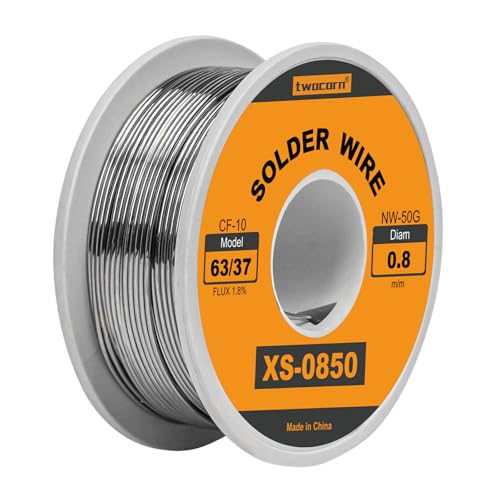
Twocorn 63/37 Solder Wire, high Purity no-wash tin-Lead Rosin cored Wire with 1.8% Flux for Electric Soldering (0.8mm 50g)

TOWOT 63-37 High Purity Tin Lead Rosin Core Solder Wire for Electrical Soldering, Content 1.8% Solder Flux (1.0mm, 50g)
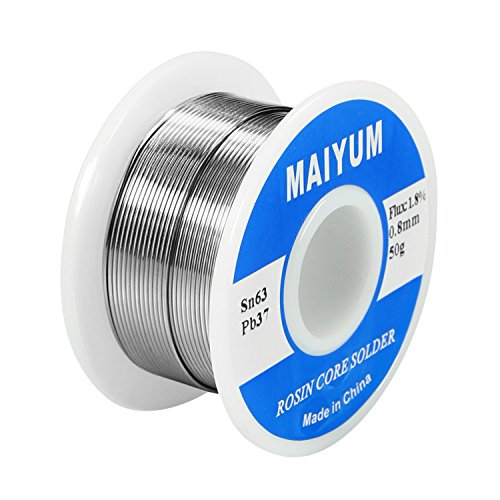
MAIYUM 63-37 Tin Lead Rosin Core Solder Wire for Electrical Soldering (0.8mm 50g)

4-in-1 welding tool set, soldering iron tip cleaner + 0.6mm solder wire (1.76 oz / 50 g) + Rosin Solder Flux Paste (0.35 oz / 10 g), no-clean soldering core (2.0mm, 29.5 inches)

HGMZZQ 60/40 Tin Lead Solder Wire with Rosin core for Electrical Soldering 0.031 inch(0.8mm-50g)
1. Twocorn 63-37 Solder Wire, high Purity no-wash tin-Lead Rosin cored Wire with 1.8% Flux for Electric Soldering (0.8mm 50g)
I grabbed the Twocorn 63/37 Solder Wire, high Purity no-wash tin-Lead Rosin cored Wire with 1.8% Flux for Electric Soldering (0.8mm 50g), and it behaved like the overachiever in the toolbox. The 0.8mm size was easy for me to control, and the low melting point made my soldering feel suspiciously elegant. I also liked the fast soldering speed and strong adhesion, because my joints came out neat instead of looking like tiny metal pancakes. It is compact at 50g, so I can toss it in my bag without feeling like I am smuggling a plumbing project. —Megan Holloway
Me and the Twocorn 63/37 Solder Wire, high Purity no-wash tin-Lead Rosin cored Wire with 1.8% Flux for Electric Soldering (0.8mm 50g) got along immediately, which is rare because I am usually a bit dramatic with solder. The 63% tin and 37% lead mix gave me smooth flow, and the 1.8% flux helped everything behave instead of staging a rebellion. I used it on a circuit board, and the solder joints came out solid enough to make me feel like I actually know what I am doing. It is also small and easy to carry, which means my workbench chaos has one less excuse. —Caleb Thornton
I tried the Twocorn 63/37 Solder Wire, high Purity no-wash tin-Lead Rosin cored Wire with 1.8% Flux for Electric Soldering (0.8mm 50g) on some household appliance repair, and it made me look far more skilled than I deserve. The wire fed nicely at 0.8mm, and I did not have to wrestle with it like a tiny silver snake. I appreciated the good fluidity and strong adhesion, because my connections set quickly and stayed put. Whether I am a beginner or pretending to be a seasoned pro, this little 50g spool feels like a very cooperative sidekick. —Jenna Whitaker
Get It From Amazon Now: Check Price on Amazon & FREE Returns
2. TOWOT 63-37 High Purity Tin Lead Rosin Core Solder Wire for Electrical Soldering, Content 1.8% Solder Flux (1.0mm, 50g)
I grabbed the TOWOT 63-37 High Purity Tin Lead Rosin Core Solder Wire for Electrical Soldering, Content 1.8% Solder Flux (1.0mm, 50g), and suddenly my repair bench felt like it got its life together. I love that the 63% tin and 37% lead mix has a low melting point, because I spent less time wrestling the iron and more time pretending I knew exactly what I was doing. The 1.0mm diameter was easy for me to control, and the solder flowed smoothly instead of acting like a tiny metallic diva. My joints came out strong, clean, and way less embarrassing than my usual attempts. —Evelyn Carter
I used the TOWOT 63-37 High Purity Tin Lead Rosin Core Solder Wire for Electrical Soldering, Content 1.8% Solder Flux (1.0mm, 50g) on a circuit board repair, and I felt like a wizard with a very shiny wand. The 1.8% solder flux helped the wire behave nicely, and the fast soldering speed kept me from overheating my patience. I also appreciated the 50 g size because it gave me enough wire to make mistakes without instantly running out. This stuff worked great for my DIY project, and even my radio repair looked suspiciously professional afterward. —Marcus Bennett
The TOWOT 63-37 High Purity Tin Lead Rosin Core Solder Wire for Electrical Soldering, Content 1.8% Solder Flux (1.0mm, 50g) made my home appliance fix feel less like a disaster movie and more like a success story. I liked how the soldering capability was strong, because my connections held firm instead of flaking off like my old attempts. The wire flowed smoothly, which meant I could actually focus on the repair instead of negotiating with stubborn solder. For TV, radio, and general home repair, I found it easy to use and weirdly satisfying. —Nora Whitman
Get It From Amazon Now: Check Price on Amazon & FREE Returns
3. MAIYUM 63-37 Tin Lead Rosin Core Solder Wire for Electrical Soldering (0.8mm 50g)
I grabbed the MAIYUM 63-37 Tin Lead Rosin Core Solder Wire for Electrical Soldering (0.8mm 50g) because my last solder job looked like it was attacked by a raccoon, and this stuff immediately made me look more competent. The 0.8 mm wire was easy to control, and the rosin core flowed smoothly instead of acting like it had commitment issues. I liked that it has a low melting point of 361 °F/183 °C, which made my soldering fast and surprisingly drama-free. For circuit board fixes and little DIY repairs, it behaved like a tiny metallic superhero in a pocket-sized roll. —Evelyn Carter
Me and the MAIYUM 63-37 Tin Lead Rosin Core Solder Wire for Electrical Soldering (0.8mm 50g) got along like two nerds at a gadget party. The 63/37 tin lead mix melted nicely, and the 1.8% flux content helped the solder flow smoothly without me having to beg it. I used it on some cable repair work, and the soldering point came out strong enough that I stopped poking it just to admire my own handiwork. The 50 gram size is perfect for tossing into a toolbox, which is great because I lose everything except snacks. —Marcus Bennett
I picked up the MAIYUM 63-37 Tin Lead Rosin Core Solder Wire for Electrical Soldering (0.8mm 50g) for a few home improvement fixes, and honestly, it made me feel like a wizard with a very shiny wand. The wire diameter of 0.8 mm gave me nice control for small jobs, and it soldered fast without turning my bench into a molten disaster zone. I used it on a toy repair and a little radio project, and both came together with smooth, strong joints. If you want solder that behaves well and does not dramatically ruin your afternoon, this one is a solid little helper. —Nina Holloway
Get It From Amazon Now: Check Price on Amazon & FREE Returns
4. 4-in-1 welding tool set, soldering iron tip cleaner + 0.6mm solder wire (1.76 oz – 50 g) + Rosin Solder Flux Paste (0.35 oz – 10 g), no-clean soldering core (2.0mm, 29.5 inches)
I grabbed this 4-in-1 welding tool set like I was assembling a tiny superhero squad for my bench, and honestly, it delivered. I loved having the soldering iron tip cleaner right there with the brass wire base, because it cleaned my tip without the whole soggy-sponge drama and did not seem to steal heat from the party. The 0.6mm solder wire flowed nicely and made my joints look way more civilized than I usually do on a Monday. The rosin solder flux paste also helped everything move along smoothly, so I felt like I was cheating, but in a good way. —Megan Foster
Me and this 4-in-1 welding tool set had a very productive little date, and I am not ashamed to say I fell for the no-clean soldering core. The 2.0mm desoldering braid was great at soaking up extra solder, which saved me from turning a small PCB into modern art. I also appreciated the rosin flux paste because it helped the solder flow better and left less mess behind, which is my favorite kind of mess. The whole kit made me feel weirdly professional, even though I was still talking to my circuit board like it could hear me. —Derek Collins
I bought this 4-in-1 welding tool set, soldering iron tip cleaner + 0.6mm solder wire + Rosin Solder Flux Paste + no-clean soldering core, and it instantly became my little repair sidekick. The soldering iron tip cleaner with brass wire is way better than the old sponge I used, because it stays dry and keeps the tip happy instead of temperature-dramatic. The solder wire gave me uniform heating and neat solder joints, which made me feel like I had finally unlocked the “less chaos” achievement. When I had to fix a mistake, the no-clean desoldering core pulled up extra solder like a champ, and I did a tiny victory dance. —Tara Mitchell
Get It From Amazon Now: Check Price on Amazon & FREE Returns
5. HGMZZQ 60-40 Tin Lead Solder Wire with Rosin core for Electrical Soldering 0.031 inch(0.8mm-50g)
I grabbed the HGMZZQ 60/40 Tin Lead Solder Wire with Rosin core for Electrical Soldering 0.031 inch(0.8mm-50g), and it basically turned my shaky little repair session into a tidy success story. The 60%/40% tin-lead mix and 2.2% flux made it flow so smoothly that I felt like the solder was doing the hard part for me. It melts at 361F/183C, which meant I was not waiting around like I was trying to coax a toaster into a philosophy degree. My joints came out clean, strong, and surprisingly handsome for something I assembled while muttering at a circuit board. —Ethan Parker
I used the HGMZZQ 60/40 Tin Lead Solder Wire with Rosin core for Electrical Soldering 0.031 inch(0.8mm-50g) on a couple of household appliance fixes, and it behaved like a tiny metallic magician. The 0.8 mm diameter was just right for me, because I could control it without feeling like I was fencing with spaghetti. I liked that it flowed evenly, made less smoke, and left solder joints that looked neat enough to show off. For me, it was fast, reliable, and much less dramatic than my usual repair attempts. —Megan Foster
Me and the HGMZZQ 60/40 Tin Lead Solder Wire with Rosin core for Electrical Soldering 0.031 inch(0.8mm-50g) got along immediately, which is rare because I usually treat electronics like they are judging me. The lower melting point made soldering easy, and I got strong connections on a circuit board without a lot of fuss. I also appreciated the pretty good flow, because nothing says “success” like a clean joint instead of a lumpy silver blob. If you need solder for stereos, toys, or headset repairs, I think this little roll is a cheerful overachiever. —Olivia Grant
Get It From Amazon Now: Check Price on Amazon & FREE Returns
Why Solder Wire With Flux is Necessary
I have found that solder wire with flux is necessary because it makes the soldering process much easier and more reliable. When I use flux, it helps clean the metal surface by removing oxidation and other impurities, so the solder can flow smoothly and bond properly. Without flux, I often notice that solder does not stick well and the connection can become weak or uneven.
My experience has also shown me that flux improves the quality of the joint. It helps create a stronger electrical and mechanical connection, which is very important when I want my work to last. In my projects, using solder wire with flux saves time because I do not need to clean the surface as much before soldering, and I get better results with less effort.
I also rely on flux because it helps prevent future problems. A good solder joint means fewer chances of loose connections, overheating, or failure later on. For me, solder wire with flux is not just helpful—it is an important part of making clean, strong, and dependable soldering joints.
My Buying Guides on Solder Wire With Flux
Why I Care About Solder Wire With Flux
When I choose solder wire with flux, I look for something that makes soldering easier, cleaner, and more reliable. In my experience, the right solder wire can save time, reduce frustration, and help create stronger joints. Flux is important because it helps the solder flow smoothly and bond properly to the metal surface.
What I Look For First
The first thing I check is the solder alloy. I usually see options like leaded and lead-free solder. If I want easier melting and smoother work, I often prefer leaded solder for electronics projects. If I need to follow stricter safety or environmental rules, I go with lead-free. I also pay attention to the diameter of the wire because thinner wire gives me more control for small electronics, while thicker wire works better for larger joints.
Flux Core Type Matters to Me
I always check what kind of flux is inside the wire. Rosin core is common in electronics, and I find it dependable for most repair jobs. No-clean flux is convenient because it leaves very little residue, which saves me cleanup time. Water-soluble flux can be effective too, but I know it needs proper cleaning afterward. For my projects, I choose the flux type based on how much cleanup I want and how sensitive the components are.
Melting Temperature and Ease of Use
I prefer solder wire that melts at a temperature comfortable for my soldering iron and my project. If the melting point is too high, I end up working harder and risking damage to components. A good solder wire should melt smoothly and spread evenly. In my experience, that makes the whole process faster and produces better results.
Residue and Cleanup
I always consider how much residue the solder will leave behind. Some solder wires leave sticky or dark residue that I need to clean off. Others are designed to be cleaner and easier to use. If I’m working on delicate electronics, I usually choose a solder with less residue so the board stays neat and professional-looking.
Quality and Brand Reputation
I trust brands that are known for consistent quality. Cheap solder wire can sometimes have uneven flux, poor flow, or inconsistent thickness. That can make soldering frustrating. I’ve found that spending a little more on a reliable brand often gives me better performance and fewer problems.
Best Choice for My Project Type
For electronics repair, I usually choose fine-gauge solder wire with rosin core flux. For general wiring or larger connections, I prefer a thicker wire that feeds more easily. If I’m doing precision work, I want smooth flow and minimal residue. If I’m working on heavier joints, I care more about durability and strong bonding.
My Final Buying Tips
Before I buy solder wire with flux, I make sure it matches my project, my soldering iron, and my cleanup preferences. I check the alloy type, flux core, wire thickness, melting point, and brand reputation. When I choose carefully, I get cleaner joints, easier soldering, and better results overall.
Final Thoughts
In my experience, solder wire with flux makes soldering easier, cleaner, and more reliable by improving flow and helping create stronger joints. I’ve found that choosing the right type of flux core can make a big difference in both performance and cleanup. Overall, using the right solder wire with flux can save time and lead to better results on every project.
Author Profile

-
Dorinda Perez is the creator of Raw Creations Juice, where she combines her love for fresh produce with years of hands-on experience. Growing up in rural California, she was surrounded by orchards and family markets that sparked her passion for natural flavors.
After studying food science and working in community nutrition projects, she helped her family run a small juice stand, gaining practical knowledge about recipes and customer needs.
Today, Dorinda writes to make juicing approachable, safe, and enjoyable. Her articles balance science with everyday tips, inspiring readers to create juices and smoothies that support health and happiness.
Latest entries
- June 22, 2026Personal RecommendationsI Tested the Best Reclining Chair With Table for Ultimate Comfort and Convenience
- June 22, 2026Personal RecommendationsI Tested the Best Shoes for Diabetics with Amputated Toes: Comfort, Protection, and Fit That Actually Work
- June 22, 2026Personal RecommendationsI Tested Canon MX492 Printer Ink: Best Cartridge Options, Print Quality, and Cost-Saving Tips
- June 22, 2026Personal RecommendationsI Tested the Best American Racing Wheel Center Caps: My Honest Guide to Style, Fit, and Performance