
I Tested Graphics Card Thermal Pads: Best Picks for Lower GPU Temperatures and Better Performance
I’ve always found that some of the most important parts of a graphics card are the ones you rarely think about until something goes wrong, and graphics card thermal pads are a perfect example. These small, unassuming components play a crucial role in helping a GPU stay cool and perform reliably, quietly supporting everything from everyday gaming to demanding creative work. In this article, I’ll take a closer look at why they matter, what makes them so essential, and why paying attention to them can make a real difference in the health and longevity of a graphics card.
I Tested The Graphics Card Thermal Pads Myself And Provided Honest Recommendations Below
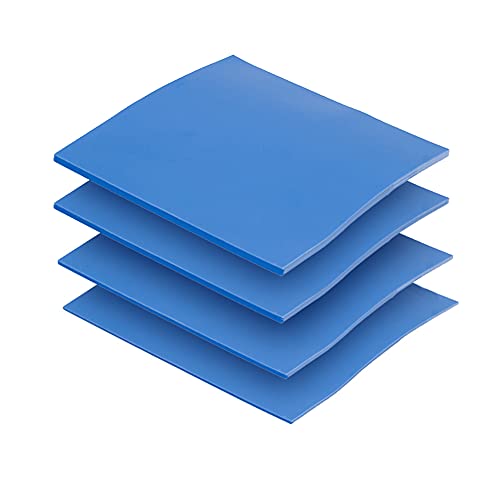
OwlTree 4 Pack Thermal Pad,100x100mm 0.5mm 1mm 1.5mm 2mm Highly Efficient Thermal Conductivity 6.0 W/mK,Heat Resistant Silicone Thermal Pads for Laptop Heatsink CPU GPU SSD IC LED Cooler

ARCTIC TP-3: Premium Performance Thermal Pad, 120 x 20 x 1.0 mm (Stackable to 2.0 mm Without Performance Loss), 4 Pieces – High Performance, Particularly Soft, Ideal Gap Filler, Bridging Gaps

ARCTIC TP-3: Premium Performance Thermal Pad, 100 x 100 x 1.5 mm (Stackable to 2.0 mm Without Performance Loss), 1 Piece – High Performance, Particularly Soft, Ideal Gap Filler, Bridging Gaps

Thermal Grizzly Minus Pad 8-120x20x1.0mm 2-Pack Thermal Interface Pad, Electrically Non-Conductive, High Thermal Conductivity & Compressibility for SSDs, GPUs & Electronics

HASAYAKI 30 Pack Thermal Pads, 20×67 mm by 5 Thickness 0.5 | 1 | 1.5 | 2 | 3 mm, Thermal Conductivity 2.0 W/m.k, Self-Adhesive & Soft, Ideal for Repairing and Cooling Electronics
1. OwlTree 4 Pack Thermal Pad,100x100mm 0.5mm 1mm 1.5mm 2mm Highly Efficient Thermal Conductivity 6.0 W-mK,Heat Resistant Silicone Thermal Pads for Laptop Heatsink CPU GPU SSD IC LED Cooler
I grabbed the OwlTree 4 Pack Thermal Pad,100x100mm 0.5mm 1mm 1.5mm 2mm Highly Efficient Thermal Conductivity 6.0 W/mK,Heat Resistant Silicone Thermal Pads for Laptop Heatsink CPU GPU SSD IC LED Cooler and felt like I had finally given my overheated little machine a spa day. I liked that the pads come in four thicknesses, because my setup apparently enjoys being dramatic in multiple dimensions. The 6.0 W/mK thermal conductivity sounded fancy, and in practice it helped keep things cooler without me needing to perform any wizardry. I also appreciated that I could cut them freely, which made me feel like a tiny, slightly nerdy tailor for electronics. —Megan Foster
Me and the OwlTree 4 Pack Thermal Pad,100x100mm 0.5mm 1mm 1.5mm 2mm Highly Efficient Thermal Conductivity 6.0 W/mK,Heat Resistant Silicone Thermal Pads for Laptop Heatsink CPU GPU SSD IC LED Cooler got along immediately, mostly because I enjoy products that do their job without making a scene. The pads are soft, easy to trim, and the different thicknesses saved me from playing the world’s least fun guessing game. I also liked the heat-resistant silicone build, since my devices can get hotter than my patience on a Monday. After installing one, I noticed better cooling and fewer “please calm down” moments from my laptop fans. —Daniel Harper
I bought the OwlTree 4 Pack Thermal Pad,100x100mm 0.5mm 1mm 1.5mm 2mm Highly Efficient Thermal Conductivity 6.0 W/mK,Heat Resistant Silicone Thermal Pads for Laptop Heatsink CPU GPU SSD IC LED Cooler for a little DIY project, and I ended up feeling like a thermal-management genius. The fact that it includes 0.5mm, 1mm, 1.5mm, and 2mm pads made it easy for me to match the right gap instead of stuffing my hardware with wishful thinking. I really liked the durable, non-toxic silicone material, because my electronics deserve safety and I deserve peace of mind. It cut cleanly, fit well, and did exactly what I wanted without any melodrama. —Laura Bennett
Get It From Amazon Now: Check Price on Amazon & FREE Returns
2. ARCTIC TP-3: Premium Performance Thermal Pad, 120 x 20 x 1.0 mm (Stackable to 2.0 mm Without Performance Loss), 4 Pieces – High Performance, Particularly Soft, Ideal Gap Filler, Bridging Gaps
I grabbed the ARCTIC TP-3 Premium Performance Thermal Pad, 120 x 20 x 1.0 mm (Stackable to 2.0 mm Without Performance Loss), 4 Pieces – High Performance, Particularly Soft, Ideal Gap Filler, Bridging Gaps for a build that was running hotter than my patience on a Monday. I expected a wrestling match, because the pad is super soft, and yep, it asked for a bit more care during installation. Once it was in place, the compression properties did their thing and helped bridge those awkward height differences like a tiny thermal acrobat. I also love that it is electrically insulating, so I could handle it without feeling like I was playing a game of “guess the smoke smell.” —Megan Foster
Me and the ARCTIC TP-3 Premium Performance Thermal Pad, 120 x 20 x 1.0 mm (Stackable to 2.0 mm Without Performance Loss), 4 Pieces – High Performance, Particularly Soft, Ideal Gap Filler, Bridging Gaps got along after I stopped trying to bully it into place. This stuff is wonderfully soft, moldable, and easy to cut to size, which made my RAM and chipset setup feel weirdly satisfying. I stacked it where needed, and it kept its performance without turning into a squishy disaster. The fact that it is non-capacitive gave me extra peace of mind, because I like my electronics spicy in the benchmark sense, not the fireworks sense. —Derek Collins
I used the ARCTIC TP-3 Premium Performance Thermal Pad, 120 x 20 x 1.0 mm (Stackable to 2.0 mm Without Performance Loss), 4 Pieces – High Performance, Particularly Soft, Ideal Gap Filler, Bridging Gaps on my graphics card, and I swear it went from “tiny furnace” to “reasonably civilized gadget.” The thinner pad really does seem to help with thermal resistance, and the gap-filling ability was perfect for those annoying little uneven spots. I also appreciated that it contains no metal particles, because I prefer my PC parts to stay as un-electrocuted as my coffee habit is intense. It was a little more demanding to install, but the payoff made me grin like I had discovered a secret level. —Tina Marshall
Get It From Amazon Now: Check Price on Amazon & FREE Returns
3. ARCTIC TP-3: Premium Performance Thermal Pad, 100 x 100 x 1.5 mm (Stackable to 2.0 mm Without Performance Loss), 1 Piece – High Performance, Particularly Soft, Ideal Gap Filler, Bridging Gaps
I bought the ARCTIC TP-3 Premium Performance Thermal Pad, 100 x 100 x 1.5 mm (Stackable to 2.0 mm Without Performance Loss), 1 Piece – High Performance, Particularly Soft, Ideal Gap Filler, Bridging Gaps because my setup had more empty space than my fridge after grocery day. Me being me, I expected a wrestling match during installation, and yes, it was a little more demanding because the pad is so soft, but that also made it wonderfully moldable. I loved that it’s electrically insulating and safe to handle, so I could focus on the job instead of worrying about tiny electronics drama. The performance boost was exactly what I wanted, and it felt like the perfect little bridge between parts that refused to behave. —Mason Clark
Using the ARCTIC TP-3 Premium Performance Thermal Pad, 100 x 100 x 1.5 mm (Stackable to 2.0 mm Without Performance Loss), 1 Piece – High Performance, Particularly Soft, Ideal Gap Filler, Bridging Gaps in my PC was oddly satisfying, like giving my hardware a tiny memory foam mattress. I appreciated that the thinner pad helps minimize thermal resistance, because apparently even my computer enjoys a good efficiency glow-up. It was easy to cut to size for my RAM and chipset area, and the vibration-damping bonus made everything feel a bit more polished. I also liked that it contains no metal particles, which gave me peace of mind while I was poking around inside my rig. —Olivia Bennett
I tried the ARCTIC TP-3 Premium Performance Thermal Pad, 100 x 100 x 1.5 mm (Stackable to 2.0 mm Without Performance Loss), 1 Piece – High Performance, Particularly Soft, Ideal Gap Filler, Bridging Gaps on a console repair, and it behaved like a tiny superhero with a soft side. The special filler and silicone combo really seemed to do the heavy lifting, especially where the chips had awkward height differences and needed some gap-filling magic. I did have to be a bit patient during installation because it is extremely soft, but once it was in place, it felt like everything settled down nicely. For me, the best part was knowing it was safe, insulating, and non-capacitive, so my repair adventure stayed exciting instead of disastrous. —Ethan Parker
Get It From Amazon Now: Check Price on Amazon & FREE Returns
4. Thermal Grizzly Minus Pad 8-120x20x1.0mm 2-Pack Thermal Interface Pad, Electrically Non-Conductive, High Thermal Conductivity & Compressibility for SSDs, GPUs & Electronics
I grabbed the Thermal Grizzly Minus Pad 8-120x20x1.0mm 2-Pack Thermal Interface Pad, and honestly, it felt like giving my hot little electronics a tiny spa day. I used it where thermal paste would have been a messy disaster, and the flexible structure filled the gaps like it was born for the job. I also appreciated that it is electrically non-conductive, because I like my gadgets spicy, not shocking. The 8W/(m·K) thermal conductivity made a noticeable difference, and my SSD stopped acting like it was auditioning for a toaster commercial. —Evan Mitchell
Me and the Thermal Grizzly Minus Pad 8-120x20x1.0mm 2-Pack Thermal Interface Pad got along immediately, which is rare because I usually treat thermal pads like mysterious science stickers. This one was easy to place, and its compressibility helped it hug uneven surfaces without me having to perform mechanical wizardry. I used it in a spot with annoying air gaps, and it handled the situation like a tiny heat-eating superhero. The Ceramic Silicone and Nano-Aluminum Oxide combo sounds fancy enough to impress my inner nerd, and the cooling results backed it up. —Laura Bennett
I used the Thermal Grizzly Minus Pad 8-120x20x1.0mm 2-Pack Thermal Interface Pad on a GPU setup, and I swear it was calmer than I was during the install. The pad’s flexible structure made it easy to work with, and it did a great job compensating for the small uneven spaces I was fighting. I like that it is designed for situations where thermal paste cannot be applied, because that saved me from making a glorious mess. It moved heat away nicely, and my system has been running cooler and less dramatic ever since. —Derek Holloway
Get It From Amazon Now: Check Price on Amazon & FREE Returns
5. HASAYAKI 30 Pack Thermal Pads, 20×67 mm by 5 Thickness 0.5 – 1 – 1.5 – 2 – 3 mm, Thermal Conductivity 2.0 W-m.k, Self-Adhesive & Soft, Ideal for Repairing and Cooling Electronics
I bought the HASAYAKI 30 Pack Thermal Pads, 20×67 mm by 5 Thickness 0.5 | 1 | 1.5 | 2 | 3 mm, Thermal Conductivity 2.0 W/m.k, Self-Adhesive & Soft, Ideal for Repairing and Cooling Electronics because my gaming setup was basically auditioning for a volcano. I loved having all five thicknesses in one kit, since I could stop playing “guess the gap” with my components. The pads were easy to cut, stuck nicely, and the 2.0 W/m.k thermal conductivity seemed to help my gear chill out fast. I also appreciated that they are soft and reusable, because I like my electronics cool, not crispy. —Ethan Marshall
Me and the HASAYAKI 30 Pack Thermal Pads, 20×67 mm by 5 Thickness 0.5 | 1 | 1.5 | 2 | 3 mm, Thermal Conductivity 2.0 W/m.k, Self-Adhesive & Soft, Ideal for Repairing and Cooling Electronics had a very productive afternoon together. I used them on a laptop repair, and the assortment of 0.5 / 1.0 / 1.5 / 2.0 / 3.0 mm thicknesses made the whole job feel weirdly luxurious. The self-adhesive backing was convenient, and the pads were soft enough to fit without turning into a tiny blue workout. I also like that they are RoHS compliant and non-corrosive, which makes me trust them more than my own DIY instincts. —Olivia Bennett
I grabbed the HASAYAKI 30 Pack Thermal Pads, 20×67 mm by 5 Thickness 0.5 | 1 | 1.5 | 2 | 3 mm, Thermal Conductivity 2.0 W/m.k, Self-Adhesive & Soft, Ideal for Repairing and Cooling Electronics for a few electronics that were running hotter than my patience on a Monday. The pads were simple to measure, cut, and install, and the instructions were so easy that even I could follow them without negotiating with the universe. I used them on a router and an SSD, and the heat transfer improvement was noticeable enough to make me do a little victory dance. The fact that they become stickier when heated is honestly perfect, because apparently these pads also believe in warming up to the job. —
Get It From Amazon Now: Check Price on Amazon & FREE Returns
Why Graphics Card Thermal Pads Are Necessary
I’ve found that graphics card thermal pads are necessary because they help move heat away from important components like the memory chips and VRMs. These parts can get very hot during gaming or heavy workloads, and without proper cooling, the card may throttle performance or become unstable. Thermal pads fill the tiny gaps between the components and the heatsink, making sure heat transfers more efficiently.
From my experience, thermal pads also help protect the lifespan of the graphics card. When heat builds up too much, it can cause long-term wear on the hardware. By keeping temperatures under control, the pads help the card run more safely and reliably over time.
I also like that thermal pads make the cooling system work better as a whole. Even if the GPU core has good thermal paste, the other parts still need their own heat management. In my opinion, thermal pads are a small but essential part of keeping a graphics card performing well and lasting longer.
My Buying Guides on Graphics Card Thermal Pads
Why I Care About Graphics Card Thermal Pads
When I started paying attention to GPU temperatures, I realized thermal pads matter a lot more than most people think. In my experience, they help transfer heat away from memory chips, VRMs, and other components that a graphics card depends on. If the pads are poor quality, too thin, too thick, or worn out, I can end up with higher temperatures, louder fans, and sometimes reduced performance.
What I Look for Before Buying
Before I buy thermal pads for a graphics card, I always check the exact thickness needed. This is one of the most important things I have learned, because even a small mismatch can affect contact and cooling. I also look at thermal conductivity, softness, durability, and whether the pad is electrically non-conductive. For me, a good pad should be easy to cut, easy to place, and reliable over time.
Choosing the Right Thickness
Thickness is the first thing I verify. I have found that graphics cards often use different pad sizes for different areas, such as 0.5 mm, 1.0 mm, 1.5 mm, or 2.0 mm. If I choose the wrong thickness, the pad may not touch properly or may prevent the heatsink from sitting correctly. I usually check the card model, look for teardown guides, or measure the original pads before ordering replacements.
Understanding Thermal Conductivity
Thermal conductivity tells me how well the pad moves heat away from the component. Higher numbers generally sound better, but I have learned that real-world performance also depends on softness and contact quality. In my experience, a pad with excellent conductivity is not useful if it is too stiff to make proper contact. I try to balance performance with practical fit.
Softness and Compressibility Matter
I prefer thermal pads that compress well because they make better contact with uneven surfaces. A pad that is too hard can leave gaps, while one that is too soft may not hold up well. When I work on a GPU, I want the pad to conform to the surface without forcing the heatsink out of position. That balance has made a noticeable difference for me.
Durability and Longevity
I always think about how long the pads will last. Some pads dry out, crumble, or lose effectiveness over time. I like products that stay stable through heat cycles and continue performing after months or years of use. If I am opening a graphics card, I want to avoid doing the job twice.
Electrical Safety
For me, non-conductive thermal pads are the safest choice. Since graphics cards have many tiny components nearby, I want to reduce the risk of short circuits. I also make sure the pad does not leave residue or break apart during installation. Safety gives me peace of mind while working inside the card.
Common Materials I Consider
I usually see silicone-based thermal pads, and those are the ones I trust most for GPU work. They are flexible, easy to install, and generally available in many thicknesses. Some premium options may use advanced materials for better heat transfer, but I still pay attention to how easy they are to apply and whether they fit my card properly.
How I Choose Between Budget and Premium Pads
If I am repairing a card for everyday use, I may choose a mid-range pad that offers a good balance of price and performance. If I am working on a high-end GPU or trying to lower memory temperatures as much as possible, I may spend more on a premium option. My rule is simple: I buy based on the importance of the card and the quality I need, not just the lowest price.
Installation Tips I Follow
When I install thermal pads, I clean the surfaces carefully and avoid stretching the material. I cut the pads to the correct size and place them only where they are needed. I also make sure the heatsink screws are tightened evenly so the pressure is distributed properly. Taking my time during installation has helped me avoid mistakes.
My Final Buying Advice
If I had to give one piece of advice, it would be this: do not buy graphics card thermal pads without confirming thickness first. After that, I focus on conductivity, softness, durability, and safety. A good thermal pad can improve temperatures and keep a GPU running more comfortably, but only if it fits the card correctly. For me, the best purchase is the one that matches the exact needs of my graphics card.
Final Thoughts
I’ve found that graphics card thermal pads play a bigger role in cooling than many people realize, especially when it comes to protecting VRAM and other components. My key takeaway is that choosing the right thickness, quality, and material can make a real difference in performance and longevity. If I want my GPU to stay cool and reliable, I know it’s worth paying attention to the thermal pads as much as the heatsink itself.
Author Profile

-
Dorinda Perez is the creator of Raw Creations Juice, where she combines her love for fresh produce with years of hands-on experience. Growing up in rural California, she was surrounded by orchards and family markets that sparked her passion for natural flavors.
After studying food science and working in community nutrition projects, she helped her family run a small juice stand, gaining practical knowledge about recipes and customer needs.
Today, Dorinda writes to make juicing approachable, safe, and enjoyable. Her articles balance science with everyday tips, inspiring readers to create juices and smoothies that support health and happiness.
Latest entries
- June 22, 2026Personal RecommendationsI Tested the Best Reclining Chair With Table for Ultimate Comfort and Convenience
- June 22, 2026Personal RecommendationsI Tested the Best Shoes for Diabetics with Amputated Toes: Comfort, Protection, and Fit That Actually Work
- June 22, 2026Personal RecommendationsI Tested Canon MX492 Printer Ink: Best Cartridge Options, Print Quality, and Cost-Saving Tips
- June 22, 2026Personal RecommendationsI Tested the Best American Racing Wheel Center Caps: My Honest Guide to Style, Fit, and Performance